When people look at high-end driveways or public park paths, they often see vibrant reds, sandy tans, or even stone-like patterns. If you are weighing up your options for a project in WA, you might be wondering if you can get those same looks with standard hot mix.
The short answer is that while you can get different colours in asphalt, the way you achieve them is very different depending on whether you use hot mix asphalt or resin asphalt.
Can you colour hot mix asphalt?
Standard hot mix is naturally black because it uses bitumen as the binder. Bitumen is a heavy, dark byproduct of crude oil. Because it is so dark, you cannot just stir in a bottle of dye and expect it to turn bright blue or green.
However, you can get a red or “terracotta” look with hot mix. This is done by:
- Using a red stone aggregate (like red granite or oxide-rich gravel).
- Adding a red oxide pigment to the mix while it is hot.
This is a common sight on Perth cycle paths and rural driveways. It looks great and holds its colour well, but your options are pretty much limited to black or deep red. You cannot get light creams, greys, or bright colours because the black bitumen always wins.
What about patterns and stamping?
You might have seen asphalt that looks like brick paving or slate. This is called stamped asphalt.
To do this, a crew lays the hot mix and then presses a wire template into the surface while it is still warm. Once it cools, the pattern is set. It is a smart way to get the look of pavers without the risk of weeds growing through the gaps or tiles shifting over time. It is much faster to install than individual bricks, but it does require specialized equipment to get the depth right.
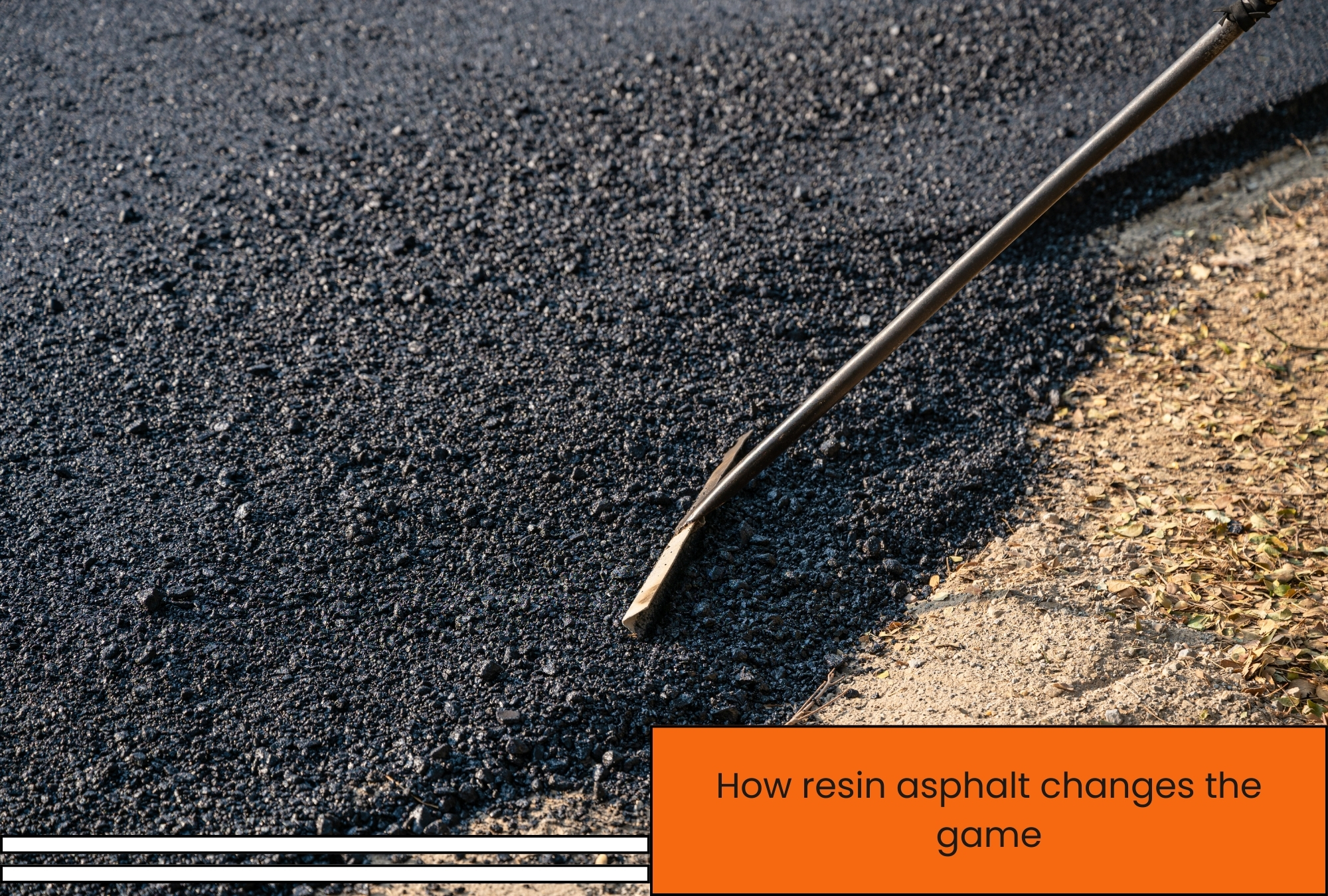
How resin asphalt changes the game
If you want a specific colour, like a light limestone look or a coastal sand finish, resin is the way to go.
Unlike hot mix, resin asphalt uses a clear synthetic binder instead of black bitumen. Because the glue is clear, the natural colour of the stones (aggregates) is what you see. If we use gold-tinted pebbles, the driveway looks gold. If we use white quartz, it looks white.
Resin gives you a much wider palette to work with. It is often the choice for heritage homes or modern architectural projects where a black driveway would just look too heavy or industrial.
Which one should you choose?
It really comes down to your budget and the look you are after.
- Choose Hot Mix if: You want a durable, cost-effective surface and you are happy with black or deep red. It is the workhorse of the industry for a reason.
- Choose Resin if: You want a specific architectural look, a lighter colour to reduce heat, or a premium finish that stands out from the neighbours.
If you are still on the fence, the best thing to do is see some samples in person. The way the light hits a red hot mix versus a tan resin is hard to judge on a computer screen.
Get a straight answer
We have been laying both types of surfaces across WA for years. We can talk you through the costs, the maintenance, and what will look best on your specific block of land. If you want to chat about your project, give us a buzz on 0400 637 713 or jump over to our contact page to send through your details. We can usually get out to your site for a look and a quote within a few days.