
Residential & commercial
Asphalt driveways in South East Queensland
A well-laid asphalt driveway is smooth to drive on, quick to lay, and can last decades if the base is done properly. That last part is where we spend our time.
What asphalt actually is
Asphalt is a mix of stone aggregate bound together with bitumen, the sticky black binder refined from crude oil. Laid hot and rolled while it is still workable, it cools into a dense, flexible surface that copes well with the constant flex of vehicles turning and braking. It is the same material used on most sealed roads, which is a fair clue to how hard-wearing it is.
People often use "asphalt" and "bitumen" to mean the same thing, but in Australia they are different. Bitumen on its own, sprayed and covered with loose aggregate, gives you a spray seal (what most people call a bitumen driveway). Asphalt is the pre-mixed, rolled product with a smoother finish. We lay both, and on the bitumen driveways page we explain when a spray seal is the smarter call.
When asphalt is the right choice
Asphalt suits most suburban and commercial driveways. It goes down fast, you can usually drive on it within a day, and repairs blend in well. It is a strong pick when you want:
- A smooth, quiet surface that is easy to sweep, wash and clear.
- A quick turnaround, often a single day for a standard driveway once the base is ready.
- A finish that handles the Queensland wet, provided the fall and drainage are right.
- A cost-effective surface over a larger area, like a long drive or a small car park.
The part you never see: the base
Almost every asphalt driveway that fails early fails from underneath. Either the base was not prepared and compacted properly, or water was never given a path away from the surface. Get those two things right and the asphalt on top does its job for years. Get them wrong and no amount of good asphalt will save it.
On every job we assess the ground, bring it to the right level with a compacted road base, and set the fall so water runs off rather than pooling or soaking in. Where a site needs it, we build in drainage before a drop of asphalt is laid. This is the difference between a driveway and a driveway that lasts.
Our process
How we lay an asphalt driveway
Assess
We visit the site, measure it, check the fall and drainage, and give you a written quote with no surprises.
Prepare
We excavate as needed, lay and compact the road base, and set the grade so water drains away.
Lay
We lay the hot mix asphalt, roll it while it is hot for density, and cut clean, tidy edges.
Finish
We clean up the site and let you know how long to keep off it while it fully cures.
Looking after a new asphalt driveway
Fresh asphalt is soft for the first few weeks while it cures and hardens. A few easy habits protect your investment:
- Keep off it for the first day or so, and avoid heavy loads for the first few weeks.
- Do not park with the wheels turned and stationary on hot days, which can scuff the surface.
- Avoid sharp jack stands, trailer legs and bike stands digging into a hot surface; use a board to spread the load.
- Hose off spilled fuel or oil promptly, as both soften bitumen over time.
Every few years a reseal will refresh the colour, lock out water and add years to the surface. When the time comes we can do that too. For the tell-tale signs it is due, see our guide on when to resurface a driveway.
Where we lay asphalt driveways
We surface homes and businesses right across South East Queensland, including Brisbane, the Gold Coast, the Sunshine Coast, Ipswich and Toowoomba. If you are somewhere in between, ask us; we very likely cover you.
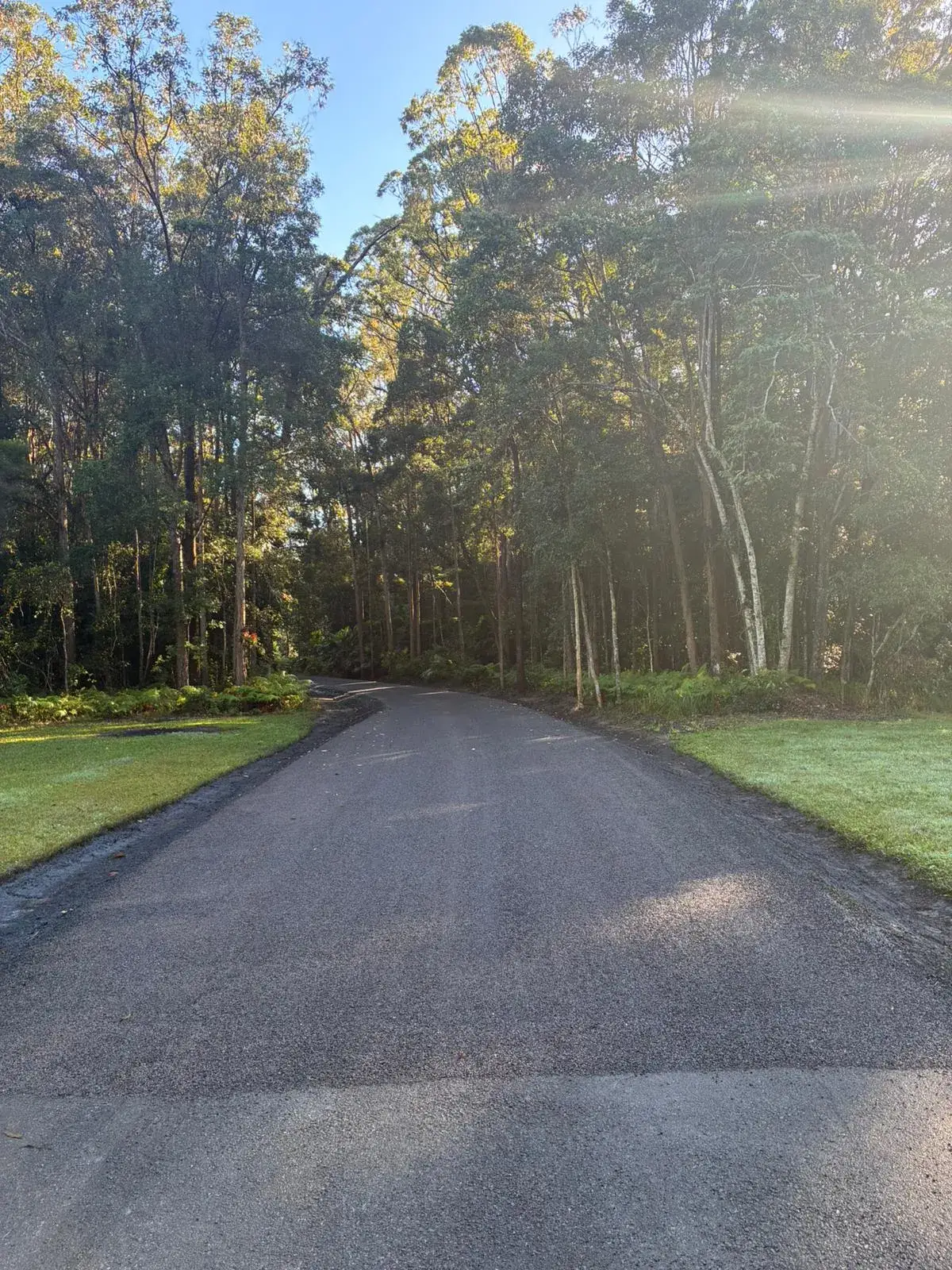
On the job
Laid hot, rolled while it works
Hot mix goes down in a tight window while it is still soft enough to spread and rake, then gets rolled straight away for density. That timing is a big part of why a surface lasts.
Common questions
Asphalt driveway questions, answered
How long before I can drive on a new asphalt driveway?
For a normal car, usually within a day. Asphalt goes off quickly enough to take light traffic soon after laying, but it keeps hardening for weeks. Keep heavy vehicles, trailers and skip bins off it for the first few weeks, and we will tell you exactly how long for your job before we leave.
How long does an asphalt driveway last?
A well-built asphalt driveway can last decades. The honest truth is that most of its life comes from the base and the drainage, not the top layer. Get those right and reseal it every few years, and it keeps going. Skip the base prep and it fails early no matter how good the asphalt is.
Asphalt or concrete, which is better for my driveway?
Both work, and it depends on the site. Asphalt is quicker to lay, usually more cost-effective over a larger area, easy to repair so patches blend in, and more forgiving of ground movement. Concrete is harder and can be finished decoratively. We are happy to talk through which suits your driveway rather than push one over the other.
Can you resurface over my existing driveway?
Often, yes. If the base underneath is still sound, laying a fresh asphalt layer over the top (an overlay) is a tidy, cost-effective refresh. If the base has failed, an overlay just hides the problem for a while, so we check the base first and tell you straight which one your driveway actually needs.
Do I need council approval for a new driveway?
The driveway inside your property usually does not, but the crossover (the section between your boundary and the road) often does, and the rules vary by council. It is worth checking with your local council before you start. We can point you in the right direction for your area.
How much does an asphalt driveway cost?
It depends on the size, the state of the ground, access for our machinery and the finish you want, so there is no honest one-size figure we could put here. What we can promise is a free site visit and a fixed price in writing before any work starts, with no pressure to go ahead.