
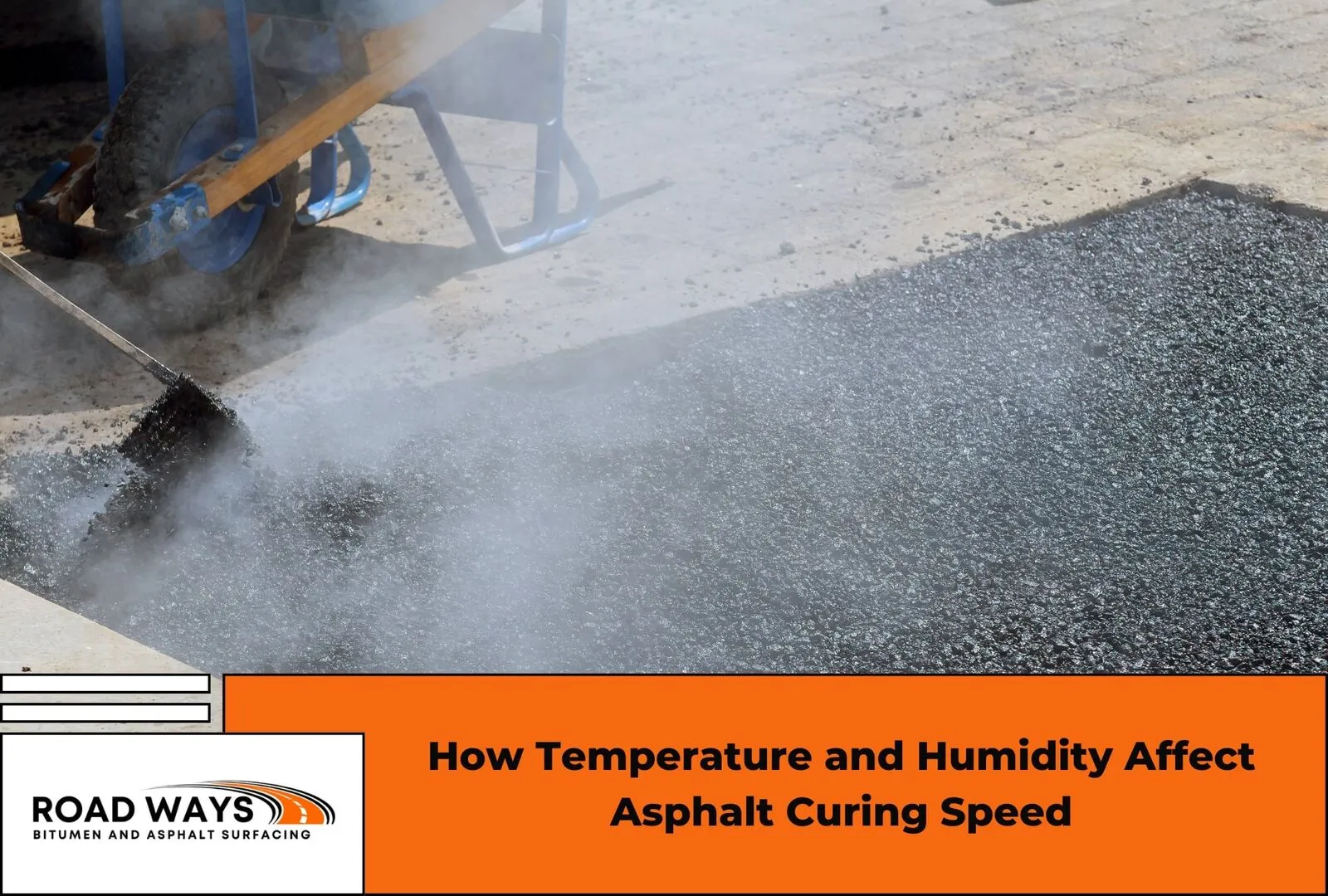
How Temperature and Humidity Affect Asphalt Curing Speed

Table of Contents

A road paving machine laying hot mix asphalt on a new road surface on a clear day, showing the steam rising from freshly laid material

Every successful road or pavement project depends on more than materials and machinery. The environmental conditions at the time of laying asphalt determine whether a surface will deliver decades of reliable service or begin to fail within a few short years. Temperature and humidity are the two most influential factors in asphalt curing speed and understanding them is essential for any project that demands lasting quality.

What Asphalt Curing Actually Means

Curing and drying are terms that are sometimes used interchangeably, but they describe two distinct phases of the asphalt hardening process. Drying refers to the evaporation of surface moisture and the initial cooling of the material after it has been laid and compacted. Curing, by contrast, is a longer chemical process in which the binder within the asphalt mix undergoes oxidation, gradually stiffening and strengthening the pavement over a period of six to twelve months.

Hot mix asphalt (HMA) is produced at temperatures between roughly 270 and 350 degrees Fahrenheit (approximately 132 to 177 degrees Celsius) and arrives on site within a similar range. As it cools from that elevated temperature down to ambient conditions, crews have a limited window in which to achieve proper compaction. Once the mix falls below approximately 185 degrees Fahrenheit (85 degrees Celsius), it becomes too stiff to compact effectively, which is why environmental conditions during laying are so critical to the pavement’s long-term structural performance.

For a detailed overview of the laying and compaction process, visit our road construction services page.

KEY POINTAsphalt curing is not complete when the surface feels firm underfoot. Full structural strength develops over six to twelve months, and the conditions present during those early stages of curing directly influence the pavement’s long-term durability.

How Air Temperature Affects Curing Speed

Temperature is the single most influential factor in how quickly asphalt cures. It governs the rate of cooling from the lay temperature down to ambient conditions, and it also affects the oxidation of the binder that continues well after the surface has been opened to traffic.

High ambient temperatures

When air temperatures are high, asphalt retains heat for longer after being laid. This extended working window is generally beneficial in terms of compaction because it allows crews more time to achieve the required density before the mix stiffens. However, extreme heat above 35 degrees Celsius introduces its own complications. Very high surface temperatures can cause the binder to remain soft long after initial compaction, making the pavement vulnerable to rutting and tracking under heavy vehicle loads. This is particularly relevant in northern Australia and during summer months across most of the country.

If you are managing a project in a high temperature environment, our asphalt maintenance and repair team can advise on appropriate binder grades and timing strategies to protect surface integrity.

Low ambient temperatures

Cold temperatures present an equally serious challenge. When air temperatures fall below approximately 10 degrees Celsius, hot mix asphalt begins to cool far more rapidly than intended. If the mix drops below the compaction threshold before crews have finished rolling, the resulting pavement will lack the required density. This leads to a surface that is prone to ravelling, water infiltration, and premature cracking. In such cases, the pavement may look acceptable in the short term but will degrade quickly once traffic loads are applied.

Ground temperature is just as important as air temperature and is often overlooked. A cold substrate will draw heat out of freshly laid asphalt very quickly, shortening the available compaction window even on a relatively mild day. Most professional paving operations use infrared thermometers to measure ground temperature, which should be at least 10 degrees Celsius and ideally rising throughout the laying process.

The role of direct sunlight and cloud cover

Sunlight assists curing by providing additional surface heat that promotes even warming and moisture evaporation. Overcast conditions remove this advantage and slow the curing process noticeably. On cloudy days in cooler months, the combination of reduced solar radiation and low air temperatures can make laying asphalt a risky undertaking unless the crew is experienced and well equipped to manage the reduced working window.

CAUTIONLaying asphalt in cold or cloudy conditions without experience and proper temperature monitoring significantly increases the risk of a poorly compacted surface. Pavement that lacks adequate density will deteriorate rapidly under traffic loading.

How Humidity Affects Asphalt Curing Speed

Humidity refers to the concentration of water vapour in the surrounding air. While temperature governs the rate of cooling and the oxidation of the binder, humidity directly affects the evaporation of residual moisture from within and around the asphalt mix. Moisture and bitumen are fundamentally incompatible, which is why humidity levels must be considered carefully when planning any paving project.

High humidity

When humidity is above approximately 80 percent, the rate of moisture evaporation from the asphalt surface slows considerably. This extends the period during which the surface remains tacky, delays the development of early strength, and can leave the pavement more susceptible to surface damage from vehicle loads. High humidity also increases the risk of moisture being trapped within the mix itself or within the substrate beneath, which weakens the bond between layers and accelerates the formation of potholes and structural failure over time.

A newly sealed asphalt road surface showing heat shimmer on a hot Australian summer day, illustrating the effect of extreme temperature on fresh pavement

In Australia’s more humid coastal and tropical regions, project scheduling needs to account for these conditions. Undertaking major paving works during the wet season or during periods of sustained high humidity is strongly inadvisable unless mitigation measures are in place.

Low humidity

Low humidity accelerates surface drying but can introduce its own problem. When moisture evaporates too rapidly from the asphalt surface, the outer layer can develop a hard skin before the material beneath has fully cured. This differential in curing rates can lead to surface cracking and a reduction in overall pavement life. The ideal humidity range for asphalt laying sits below 40 percent, allowing moisture to evaporate at a rate that supports even and consistent curing throughout the full depth of the layer.

Rain and wet conditions

Rain during or immediately after laying is one of the most damaging weather events for a new asphalt surface. Water that penetrates the mix before compaction is complete, disrupts the bond between the binder and aggregates, creating weak points that will fail under traffic. Rain falling onto freshly laid asphalt can also cause surface stripping, where the binder separates from the aggregate particles, leaving a rough and permeable surface. No reputable contractor will lay asphalt in the rain, and if rain is forecast, work should be rescheduled.

IMPORTANTAsphalt should never be laid on a wet surface or during rainfall. Even residual moisture on the substrate can prevent proper bonding between the new layer and the base, significantly reducing the life expectancy of the pavement.

The Combined Effect: Temperature and Humidity Together

Temperature and humidity rarely act in isolation. Their combined influence on curing speed is greater than either factor alone, or the interaction between the two must be understood to schedule paving work effectively.

Hot and humid conditions, which are common across Queensland, the Northern Territory, and coastal New South Wales during summer, represent the most challenging combination. High temperatures extend the workability window but also keep the surface soft for longer. High humidity simultaneously slows moisture evaporation, meaning the surface can remain vulnerable for an extended period after laying. The risk of rutting and surface deformation under vehicle loads is elevated under these combined conditions.

Moderate temperatures paired with low humidity, which are typical of autumn and spring across southern Australia, represent the closest thing to ideal paving conditions. The mix cools at a predictable rate, compaction can be achieved within a manageable window, and moisture evaporates steadily without the extremes that compromise surface quality.

ConditionTemperature RangeHumidity LevelExpected Impact on Curing
Ideal20°C to 30°CBelow 40%Fastest and most consistent curing; optimal compaction window.
Acceptable10°C to 20°C40% to 60%Adequate curing with careful scheduling and monitoring.
ChallengingAbove 35°C60% to 80%Extended curing time; risk of surface softening and tracking.
High RiskBelow 10°CAbove 80%Rapid cooling; poor compaction; potential long-term failure.

How Asphalt Mix Type Influences Curing in Different Conditions

Not all asphalt mixes respond to temperature and humidity in the same way. Selecting the right mix for the prevailing conditions is one of the most important decisions in any paving project.

A road construction crew operating a steel drum roller to compact freshly laid hot mix asphalt during a road paving project in mild weather conditions

Hot mix asphalt

Hot mix asphalt is the most widely used mix type for road construction in Australia. It is produced and laid at high temperatures, which means it is highly sensitive to the ambient conditions at the time of laying. It cures relatively quickly once compaction is complete, but it requires a sufficient working window to achieve proper density. Hot mix is the preferred choice for major road projects, high-traffic areas, and any surface where long-term structural performance is paramount.

Warm mix asphalt

Warm mix asphalt uses chemical additives or water-based foaming techniques to reduce the production and laying temperature by approximately 30 to 50 degrees Celsius compared with hot mix. This makes it more forgiving in cooler ambient conditions and extends the compaction window on projects where long-haul distances from the plant to the site are unavoidable. Warm mix is an increasingly popular choice in Australia for its environmental benefits as well as its practical advantages in variable weather conditions.

Cold mix asphalt

Cold mix asphalt is produced and applied at ambient temperatures and relies on the evaporation of solvents and water within the mix to achieve curing. Curing times for cold mix are significantly longer, ranging from days to weeks depending on ambient temperature and humidity. Cold mix is best suited to temporary repairs and patching work rather than primary road construction, and its performance is highly dependent on favourable evaporation conditions at the time of application.

Best Practice for Scheduling Around Weather Conditions

Experienced paving contractors do not leave weather management to chance. The following practices are standard for professional road and pavement work in Australia.

  1. Monitor air temperature, ground temperature, and humidity readings at the project site in the days leading up to and on the day of laying, not just at a nearby weather station.
  2. Avoid laying asphalt when air or ground temperatures are below 10 degrees Celsius or when temperatures are forecast to drop significantly within a few hours of laying.
  3. Reschedule any work where rainfall is forecast within the laying window or within the first 24 hours following completion.
  4. In humid conditions, allow additional time before opening the surface to heavy traffic, as the pavement will take longer to achieve sufficient early strength.
  5. In extreme heat, schedule laying for the cooler parts of the day such as early morning or evening to reduce the risk of surface softening and rutting.
  6. Use infrared thermometers throughout the laying and compaction process to monitor mix temperature in real time and ensure compaction is completed within the required temperature window.
  7. Select an asphalt mix and binder grade that is appropriate for the expected temperature range during both laying and the subsequent service life of the pavement.
BEST PRACTICESpring and autumn are generally the most favourable seasons for asphalt paving across most of Australia. Moderate temperatures and lower humidity provide reliable curing conditions that support high-quality compaction and long-term pavement performance.

Long-Term Curing and Ongoing Pavement Health

Once a pavement has been laid and opened to traffic, the curing process continues for months beneath the surface. During this period, the binder oxidises and the pavement gradually develops its full structural strength. The colour change from rich black to a lighter charcoal grey that occurs over the first several months is a visible indicator of this ongoing oxidation process.

During this extended curing period, the pavement benefits from protection. Avoiding heavy point loads in the same location repeatedly, limiting turning movements on soft surfaces in very hot weather, and refraining from parking heavy vehicles on newly laid areas for the first few weeks all help the pavement reach its full potential without unnecessary stress.

Applying a sealcoat at the appropriate time after curing is complete can significantly extend pavement life by slowing further oxidation and protecting the surface from water, fuel spills, and ultraviolet degradation.

Applying a sealcoat at the appropriate time after curing is complete can significantly extend pavement life by slowing further oxidation and protecting the surface from water, fuel spills, and ultraviolet degradation. Our line marking and sealcoating services are timed to align with full curing milestones to deliver the best possible protection.

DID YOU KNOW?Full asphalt curing typically takes between six and twelve months from the date of laying. Traffic volumes, pavement thickness, local climate, and the specific mix design all influence where within that range a particular surface will fall.

Table of Contents

Share this post: