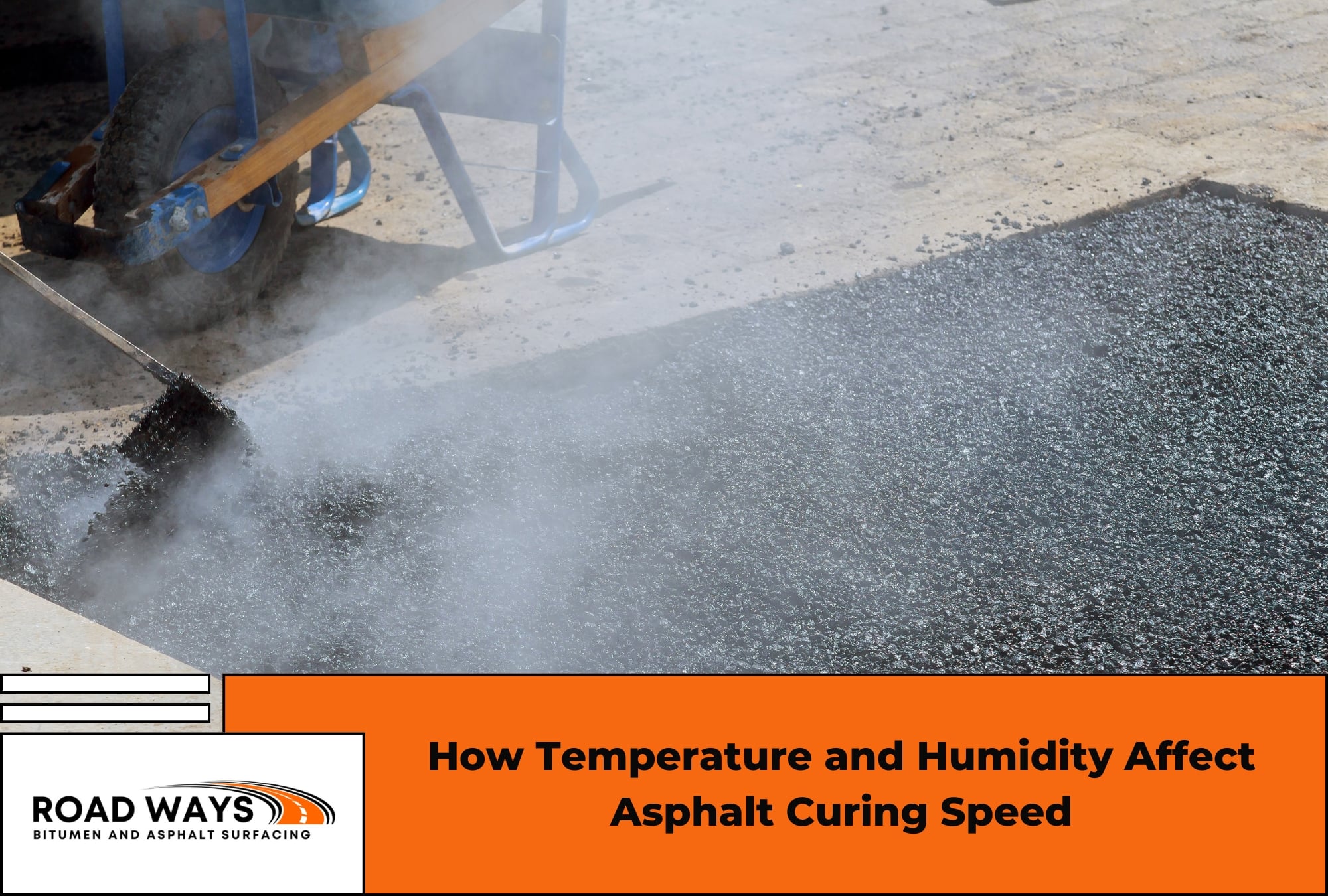
To prepare existing concrete before respraying with asphalt, the surface must be inspected, cleaned, repaired, and coated with a bonding agent. This ensures the new asphalt layer adheres properly and lasts longer. Each step prevents problems such as poor adhesion, cracking, or moisture damage that can reduce the lifespan of the surface.
Many resurfacing projects fail because of skipped preparation. Dirt, oil, or structural issues under the surface can cause peeling or splitting soon after application. Without proper drainage and bonding, the overlay may deteriorate quickly under traffic and weather.
Preparation involves inspection, deep cleaning, surface repair, drainage correction, and tack coat application before the asphalt is laid. When completed correctly, the result is a smooth, durable finish that performs like a new surface without replacing the entire slab.
Inspect and Evaluate the Concrete Surface
Before applying asphalt, inspect the concrete to make sure it is stable and suitable for resurfacing. Weak or damaged bases can cause cracks and early failure of the asphalt overlay. Begin with a close visual check to find any structural movement, moisture, or uneven levels that could affect adhesion.
Focus on these areas during inspection
- Cracks and movement
- Surface flatness
- Moisture presence
- Surface profile rating
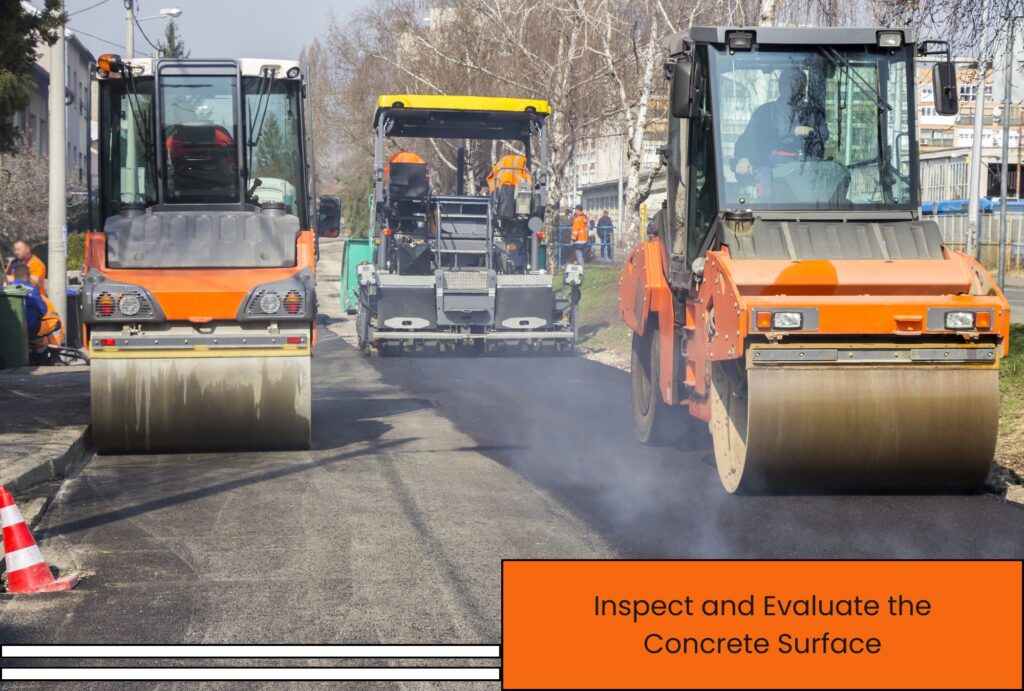
Hairline cracks can usually be repaired, but larger fractures or sections that move under pressure often mean the base has failed. Uneven areas need levelling to prevent drainage problems. Damp concrete or trapped water must be fixed before any overlay work begins. A surface profile of CSP 3 to 5, created by grinding or light blasting, provides better bonding strength.
A detailed inspection ensures the concrete can properly support the new asphalt layer, reducing the risk of early wear and structural damage.
Clean the Surface (Remove All Contaminants)
Proper cleaning is one of the most important steps before respraying concrete with asphalt. Any dust, oil, or residue left on the surface will weaken the bond and lead to peeling or cracks. The goal is to create a clean, solid base that allows the tack coat and asphalt to adhere evenly.
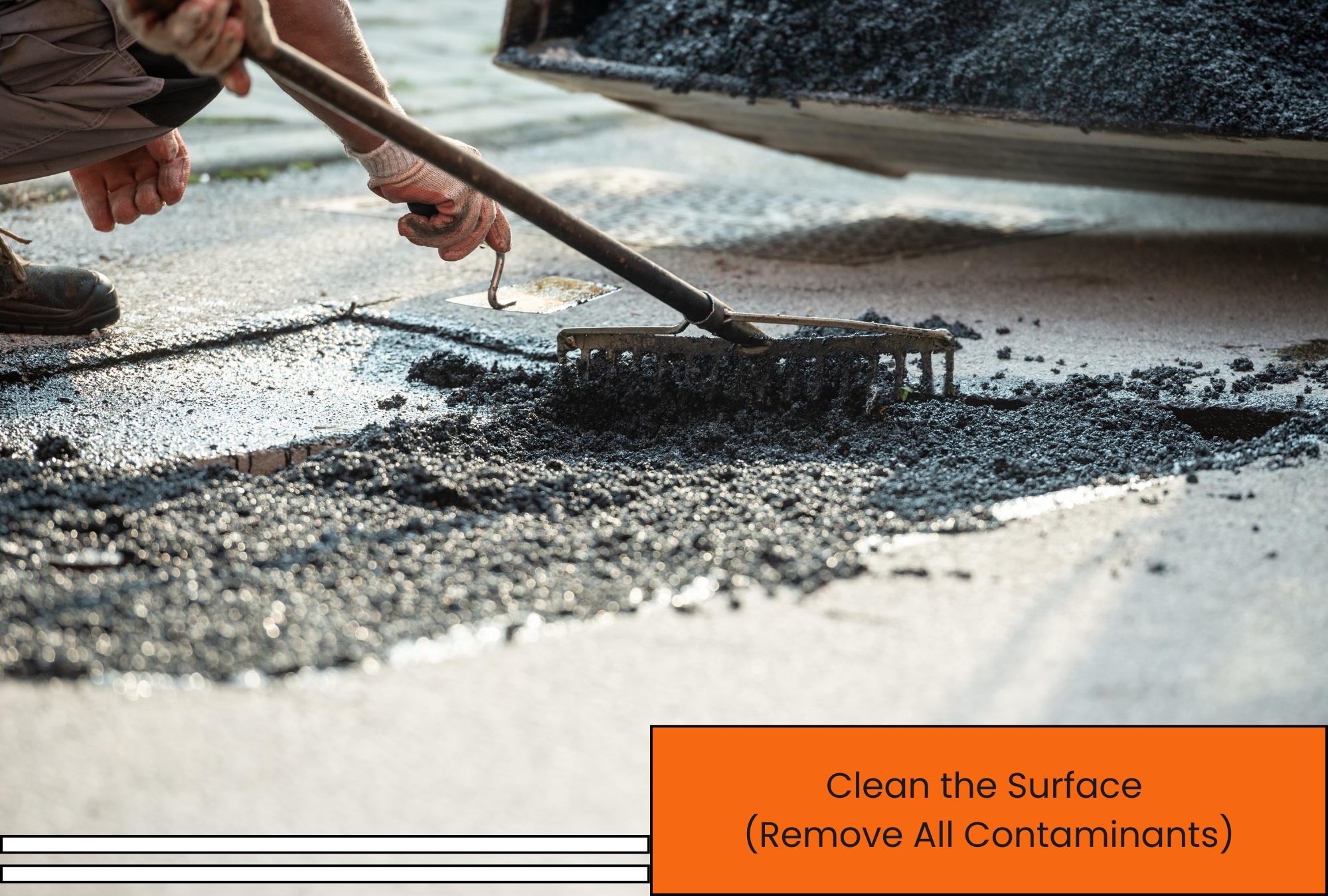
Start by using a pressure washer to remove dirt, loose particles, and debris. Apply a concrete-safe degreaser to oil or fuel stains and scrub thoroughly to lift remaining residue. If paint, sealers, or coatings are present, remove them completely using mechanical grinding or blasting.
Clear out all weeds, moss, and vegetation growing in cracks or joints. Once washed, allow the surface to dry fully before moving to the next stage. Moisture left in the concrete can trap vapour beneath the asphalt and reduce bonding strength.
Thorough cleaning prevents delamination, ensures consistent adhesion, and extends the lifespan of the new overlay.
Repair Cracks, Joints, and Defects
Concrete defects must be repaired before resurfacing to prevent cracks or movement from affecting the new asphalt. Any weakness in the surface will reflect through the overlay and cause early failure. The goal is to create a solid, stable base that supports the new layer evenly.
Start by sealing cracks using a flexible crack filler or epoxy compound. This prevents water from entering and weakening the base. For wider or active cracks, use a joint filler designed to handle movement without breaking the bond. Repair chips, spalls, or damaged edges with a polymer-modified patching mix that provides strength and flexibility.
Joints in concrete should be cleaned and refilled with a flexible filler compatible with asphalt. If old expansion joints are still active, saw-cut beside them and fill the gap to reduce reflective cracking. Severely damaged sections may need removal and patching before resurfacing begins.
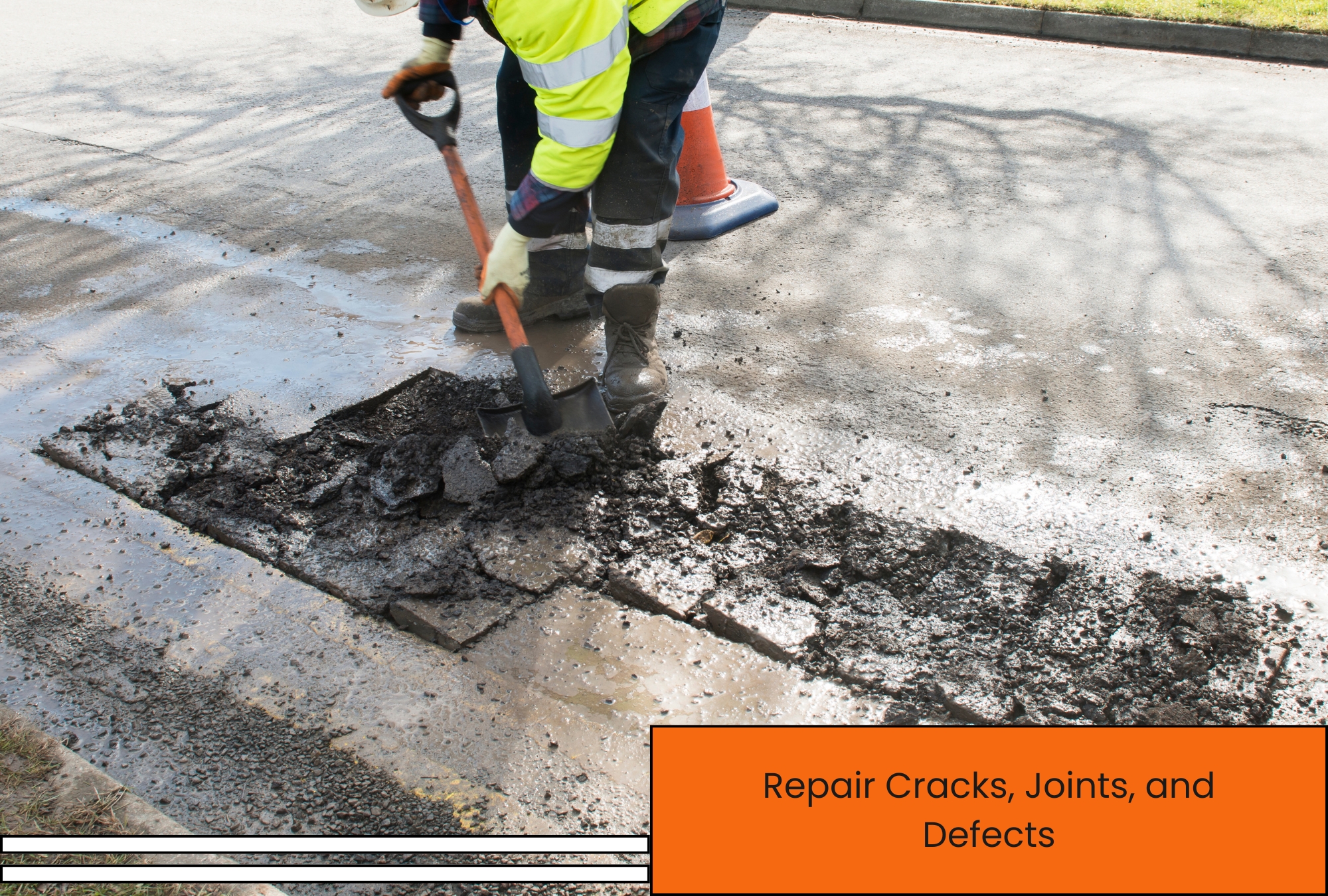
Addressing every defect early, the asphalt overlay bonds properly and maintains a smooth, even finish that resists stress and moisture over time.
Check and Fix Drainage and Levels
Proper drainage is essential before respraying concrete with asphalt. Water that pools or flows incorrectly can weaken the bond between layers and cause cracks, rutting, or early wear. The surface must be shaped so that water flows away freely and does not collect under the new asphalt.
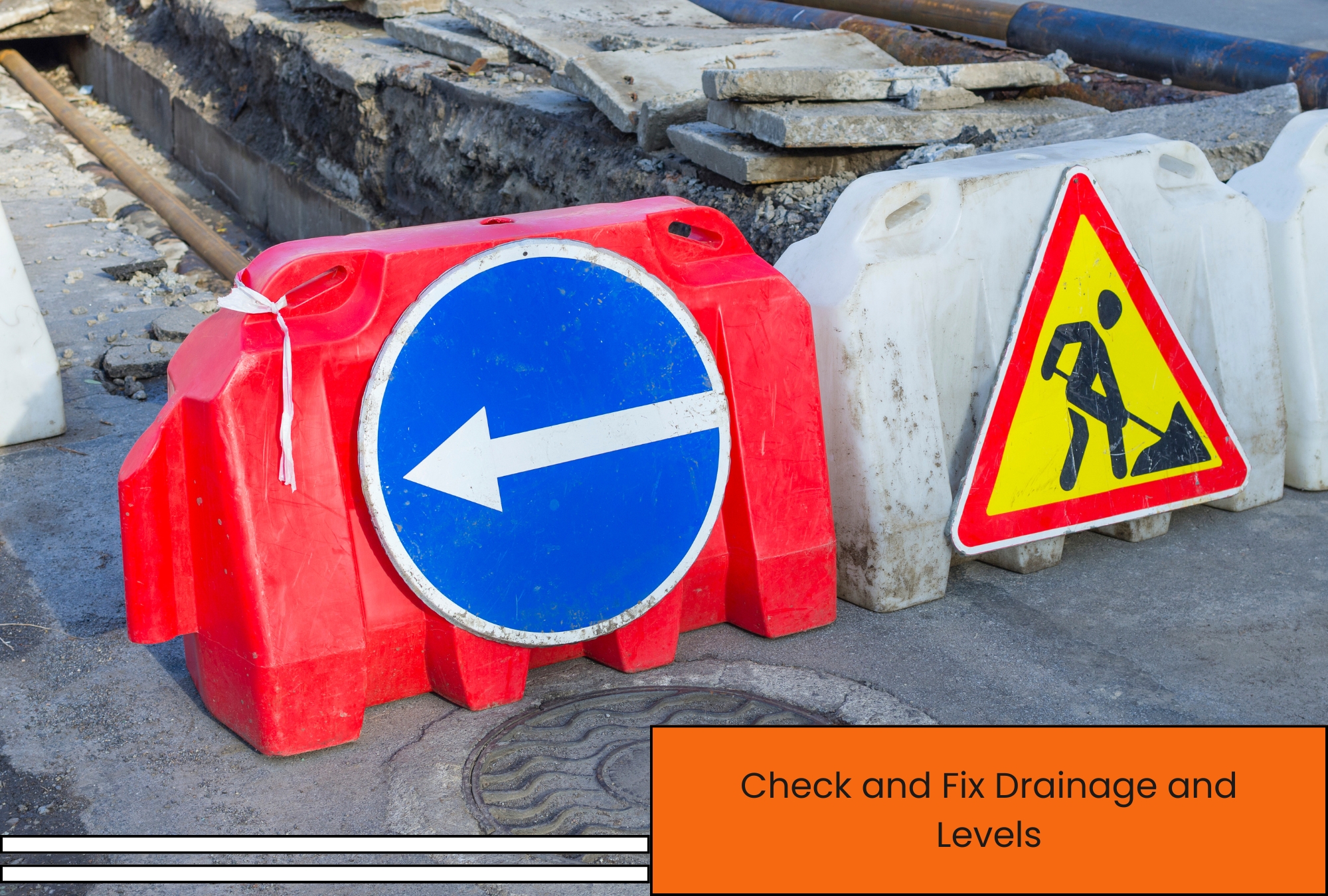
Inspect the slope of the concrete. Low points or uneven areas should be corrected using levelling compounds or patching mixes. The surface should fall slightly toward drainage points such as gutters or channels. Check that nearby drains and outlets can handle extra runoff from the new layer.
If water often builds up on the site, consider installing edge drains, grated channels, or subsurface outlets to help direct flow away from the surface. Good drainage reduces moisture retention, prevents pressure buildup, and extends the overlay’s lifespan.
Checking and correcting levels before resurfacing ensures a consistent finish and prevents water damage that could shorten pavement life.
Apply a Bonding Agent (Tack Coat)
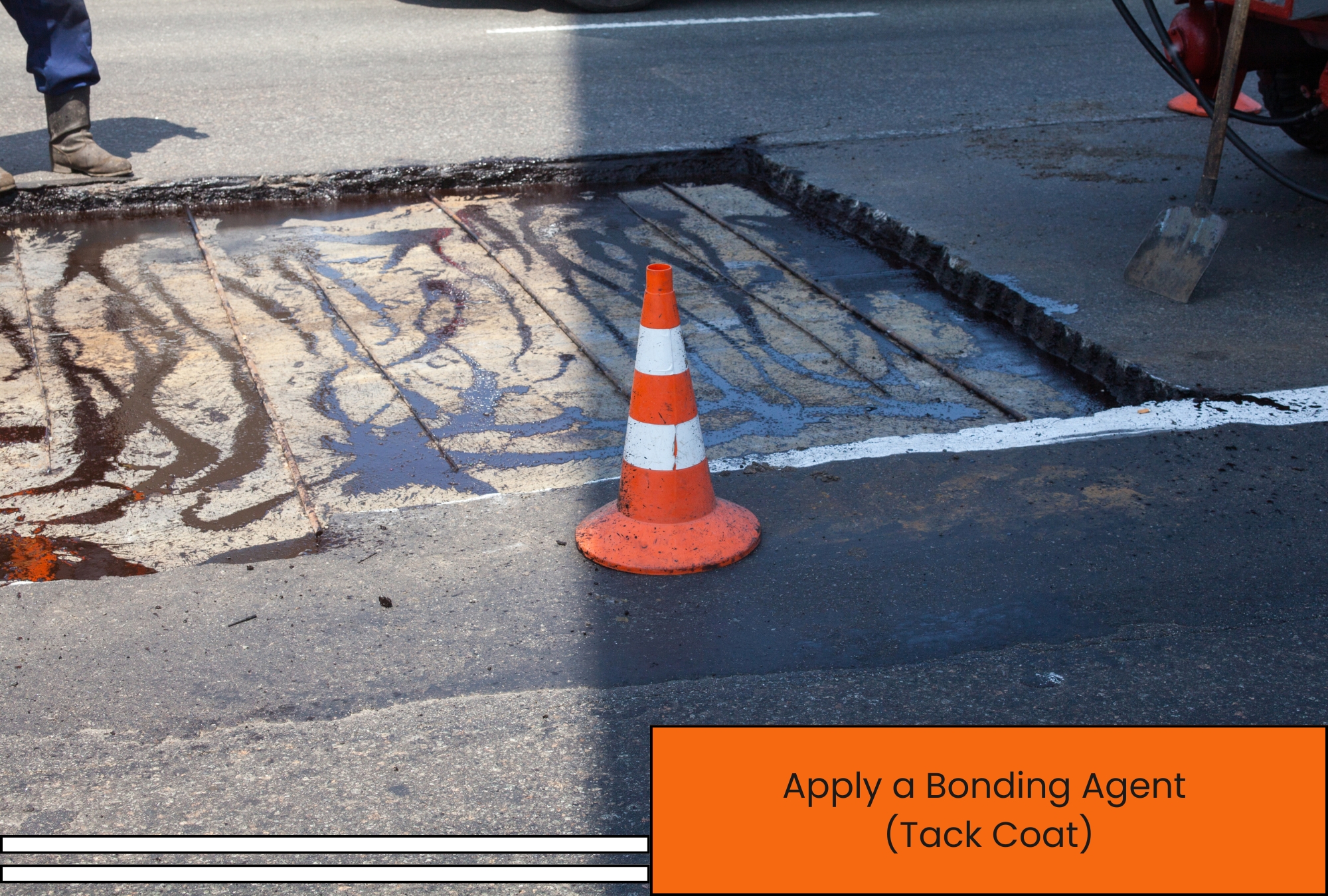
A tack coat is essential for bonding the new asphalt to the existing concrete. It acts as an adhesive layer that prevents the materials from separating over time. Without a proper tack coat, the overlay may peel, shift, or crack soon after installation.
Use a high-quality bitumen emulsion or prime coat designed for concrete-to-asphalt applications. The surface must be clean and dry before application. Apply it evenly using a sprayer to cover the surface without puddles or gaps.
Allow the tack coat to become tacky but not dry before laying the asphalt. If it dries too much, the bond strength decreases. This step creates a strong link between layers, improving durability and load capacity.
Applying a tack coat correctly ensures proper adhesion and minimises the risk of delamination or cracking, extending the overlay’s lifespan.
Use a Levelling or Scratch Course if Needed
If the concrete surface has uneven spots, dips, or high points, a levelling or scratch course helps achieve a consistent base before the final asphalt overlay. This thin layer of asphalt creates uniform thickness, strengthens bonding, and improves finish quality.
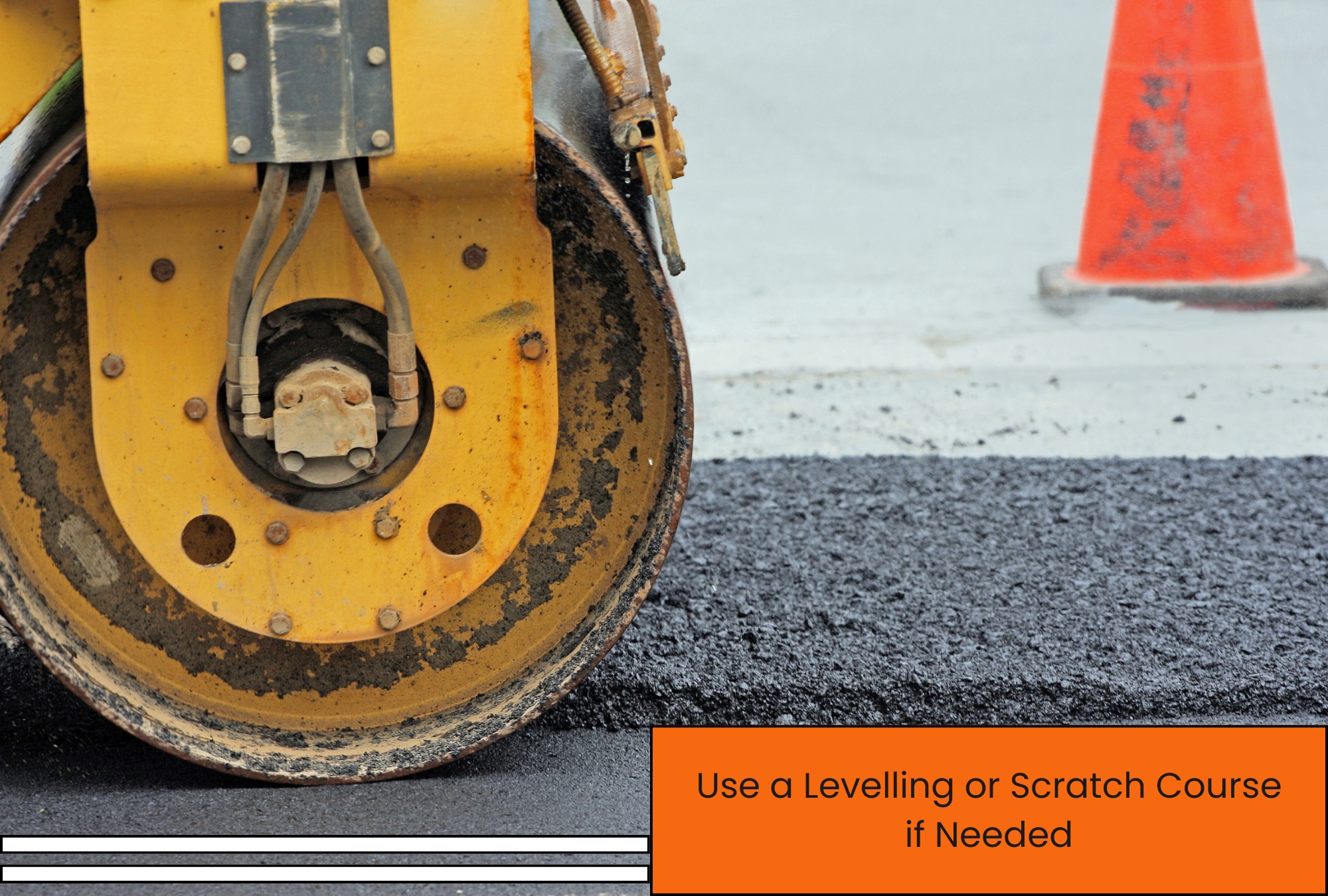
A levelling course fills shallow depressions and corrects irregular areas, reducing stress concentrations that can lead to cracks. The material should be compacted thoroughly to prevent weak points that could compromise the top layer. Once it sets, recheck the surface for evenness before applying the final overlay.
This step enhances ride quality and appearance, making the finished surface smoother and more durable. In areas subject to heavy use, it helps distribute weight evenly and maintain stability.
While not always required, a levelling course provides added protection and reliability for older or uneven bases.
Settle on the Overlay Thickness and Mix
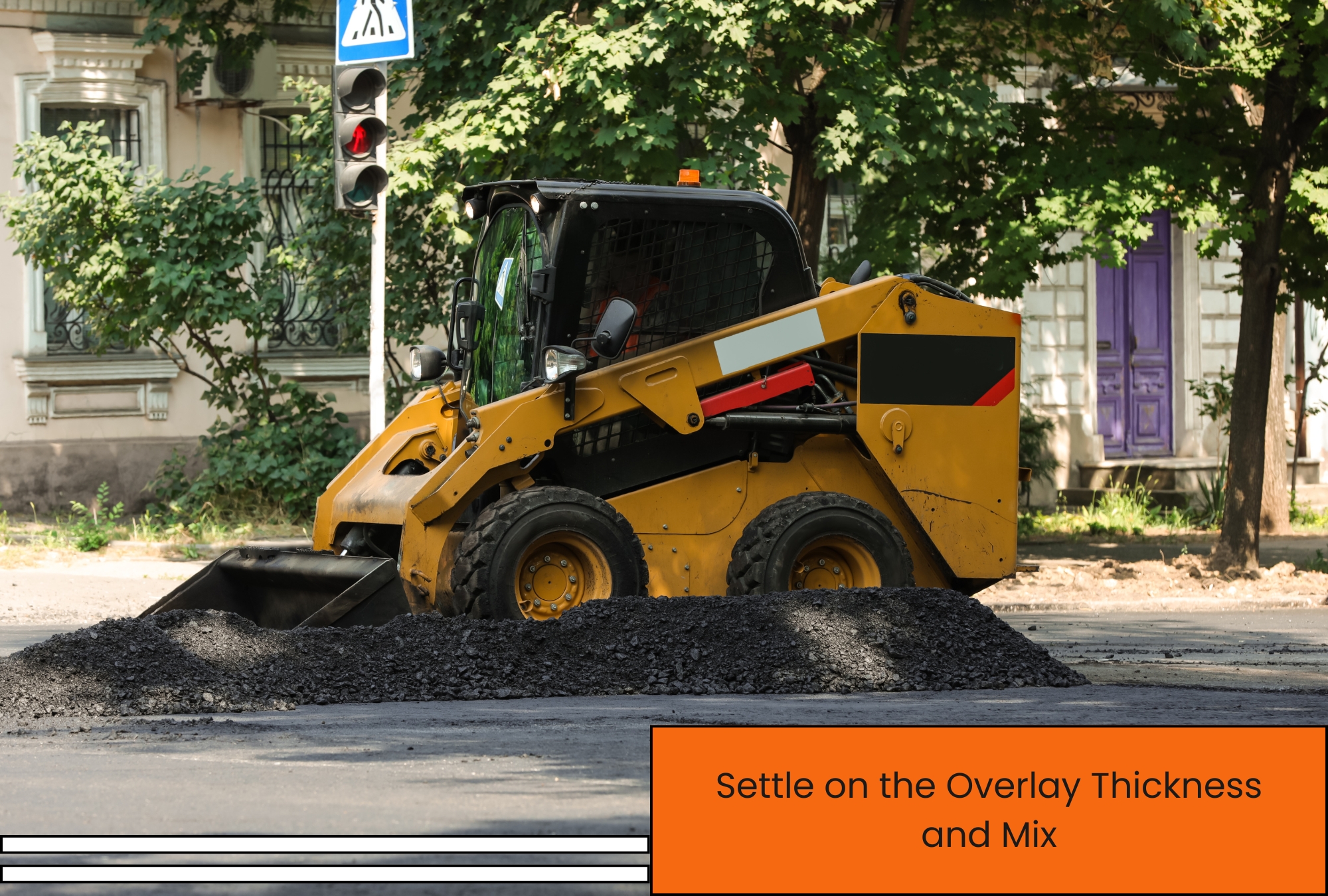
Choosing the right asphalt thickness and mix type is critical to long-term performance. The required thickness depends on the concrete’s condition, traffic loads, and site conditions.
For light-use areas such as residential driveways, 30 to 40 millimetres is suitable. Commercial spaces or access roads may need 50 millimetres or more. The asphalt mix should include proper binder content and aggregate size to resist cracking and deformation.
The contractor should assess traffic, slope, and drainage before deciding. Inconsistent or thin overlays can create weak points that fail prematurely. Maintaining uniform thickness helps improve strength and surface finish.
Correct mix design and application ensure an even surface that withstands wear, temperature changes, and vehicle weight.
Quality Control Before Surfacing
Before applying asphalt, carry out a final quality check. Each stage of preparation affects the overlay’s strength and lifespan. If the surface is not clean, dry, or stable, the new layer may fail early.
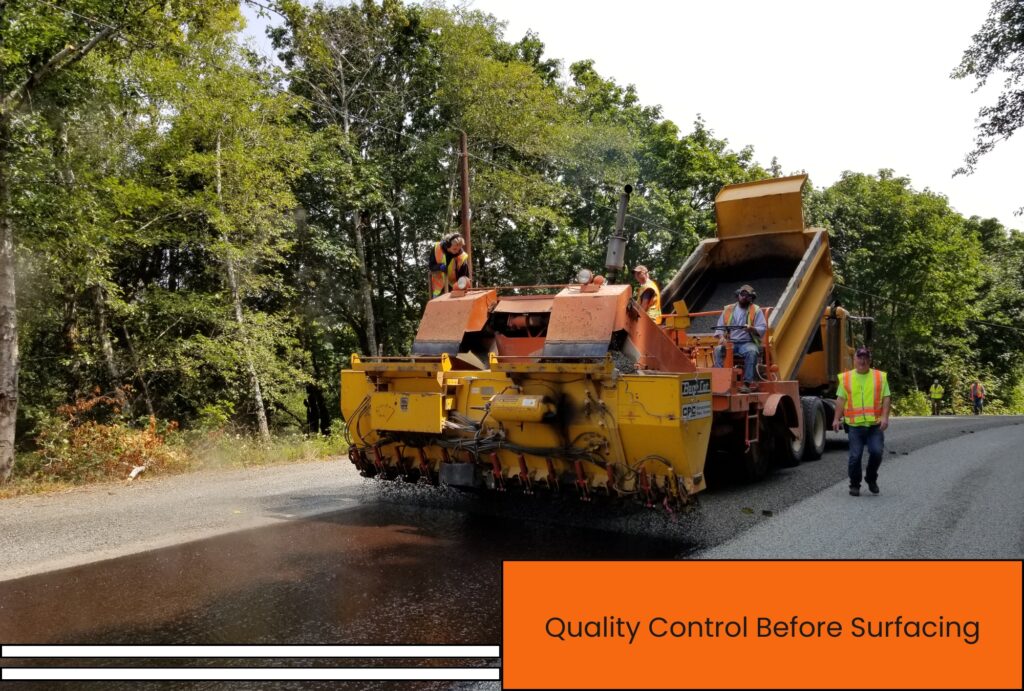
Confirm that all repairs are cured, the surface is even, and drainage points are clear. The tack coat should feel tacky but not wet. Work only in suitable weather to allow proper bonding and curing.
Delays between preparation and surfacing increase the risk of contamination and moisture. Inspect for dust, oil, and other contaminants before proceeding.
This final check ensures the asphalt bonds properly and sets evenly, reducing the chance of rework or surface damage after completion.
Why Good Preparation Matters
Good preparation determines how long the asphalt overlay lasts. If cleaning, repairs, or bonding are skipped, cracks and delamination can appear soon after completion.
Each preparation step creates a solid foundation that supports the asphalt under load and changing temperatures. Proper levelling, drainage correction, and tack coat application also improve surface strength and appearance.
Thorough preparation helps achieve a smooth, uniform finish that performs well for years. It also lowers maintenance costs by reducing the risk of early failure.
Investing time in preparation ensures a durable, long-lasting surface and prevents expensive repairs later.

Professional Help for Concrete and Asphalt Resurfacing
Preparing existing concrete before respraying with asphalt requires attention to every detail. Each stage, from cleaning and repairs to bonding and levelling, affects the strength and quality of the finished surface.
Roadways provides resurfacing solutions across Australia, including inspections, repairs, and asphalt overlays. The team ensures all preparation steps meet industry standards for long-term performance.
A well-prepared base is the key to a strong, durable asphalt finish completed right the first time.
Frequently Asked Questions
Can asphalt be sprayed directly over old concrete?
Yes, but only after proper preparation. The surface must be cleaned, repaired, and bonded to ensure lasting performance.
How long should concrete dry before applying asphalt?
Concrete should be completely dry, with no trapped moisture. Allow at least 24 to 48 hours after cleaning or repair.
What happens if cracks in the concrete are not repaired first?
Cracks left unrepaired will reflect through the asphalt and cause premature damage. Always seal or patch before resurfacing.
Is a tack coat always required?
Yes. A tack coat is essential to create strong adhesion between concrete and asphalt and prevent layer separation.
What is the ideal thickness for a concrete-to-asphalt overlay?
Most overlays range from 30 to 50 millimetres, depending on traffic volume and base condition.