
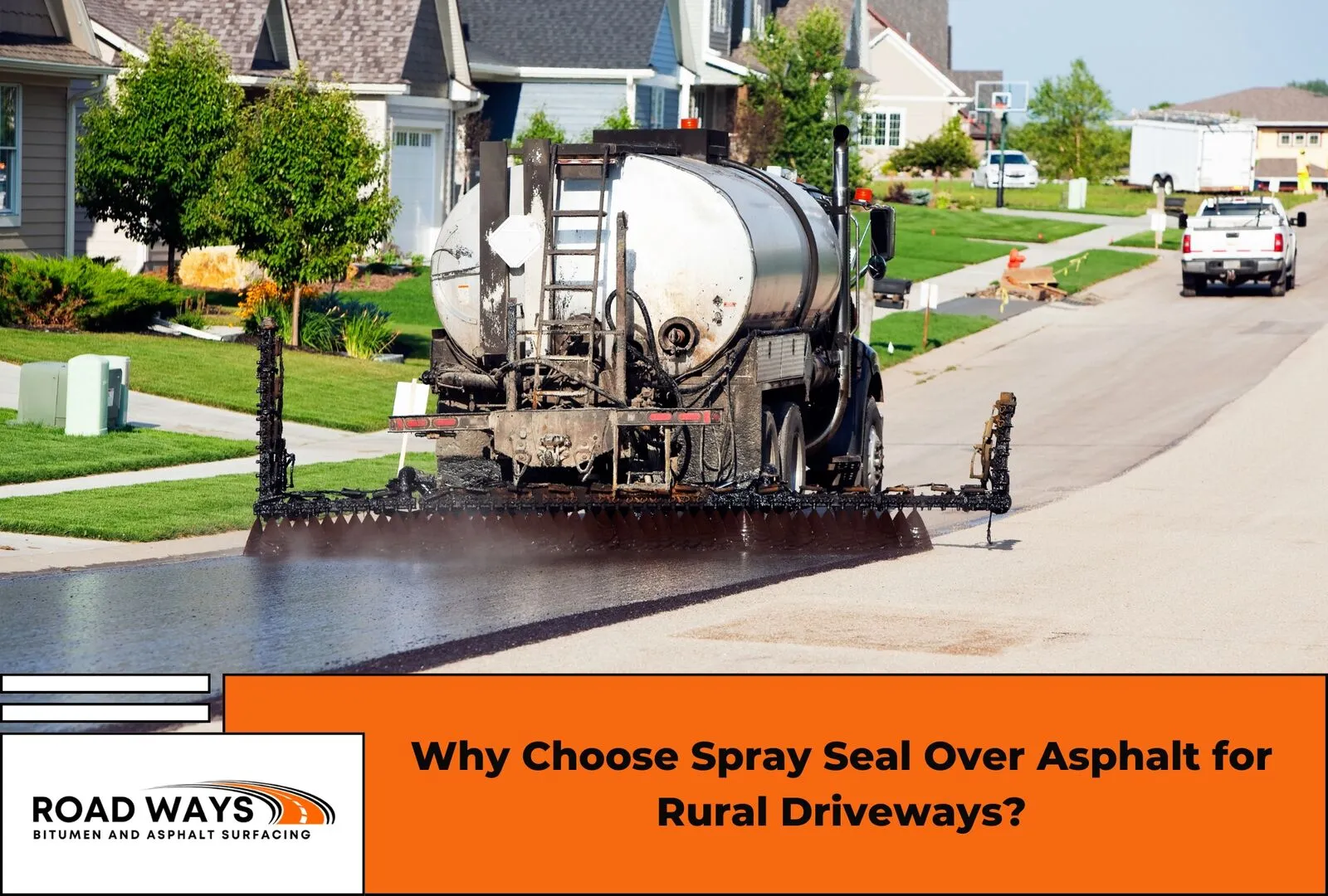
Building or resurfacing a rural driveway usually comes down to two options: asphalt or spray seal. Both have their place, but for rural and semi-rural properties, spray seal often comes out ahead. Here is why, and where asphalt still wins.
Cost-effective over distance
Cost is the big one. Rural driveways are often much longer than suburban ones, and laying asphalt over several hundred metres adds up fast. Spray seal covers that ground far more economically while still giving a hard-wearing surface, which is why it is the practical choice for a long country drive.
Flexible on ground that moves
Rural driveways are usually built on natural ground that shifts with moisture and weather. Spray seal is more flexible than asphalt and copes better with small movements in the base without cracking. That makes it well suited to lightly engineered country driveways where the ground is not perfectly stable.
Grip and dust control
Spray seal combines bitumen with a stone aggregate, giving a slightly textured finish. That texture helps tyres grip, which matters on slopes, and it keeps dust down compared to a bare gravel drive. On a farm or rural block, that means less dust drifting towards sheds and the house.
Easier upkeep
Asphalt gives a smoother finish but can crack if the base is not strong. Spray seal can simply be topped up with another coat in future without stripping the old surface, which makes maintenance simpler and cheaper over the life of the driveway.
How it handles the heat
Australian summers are hard on any surface. Both spray seal and asphalt are made with bitumen, which softens in extreme heat, but they behave differently. Spray seal's exposed stone finish keeps providing grip even if the bitumen softens slightly, so vehicles do not sink in. Asphalt is smoother and more compact, and in very high temperatures a heavily used surface can scuff or develop slight indentations under parked or turning vehicles. For rural properties exposed to long hours of direct sun with little shade, spray seal is often the more forgiving option.
When asphalt is still the better call
Spray seal is not always the answer. For regular heavy truck traffic, a tight turning area, or where you want a smooth, easy-to-sweep surface, asphalt usually finishes better and wears more evenly. An honest contractor will tell you which suits your site.
A couple of common questions
Is spray seal strong enough for heavy vehicles? Laid correctly over a properly prepared base, yes, it handles farm machinery, utes, trailers and delivery trucks. For constant heavy truck traffic, asphalt may still be the better choice.
How long does spray seal last? A spray seal driveway can last around 10 to 15 years depending on traffic, weather and maintenance, and a fresh top coat extends it further.
If you are weighing up spray seal for a rural property in South East Queensland, get in touch and we will look at the ground and give you an honest recommendation with a free written quote.