
Sealcoat and spray seal get mixed up all the time, and the confusion can cost you. One is a maintenance coat for a surface you already have; the other builds a whole new sealed surface. Pick the wrong one and you either waste money or end up with a surface that breaks down early. Here is the plain difference.
What is a sealcoat?
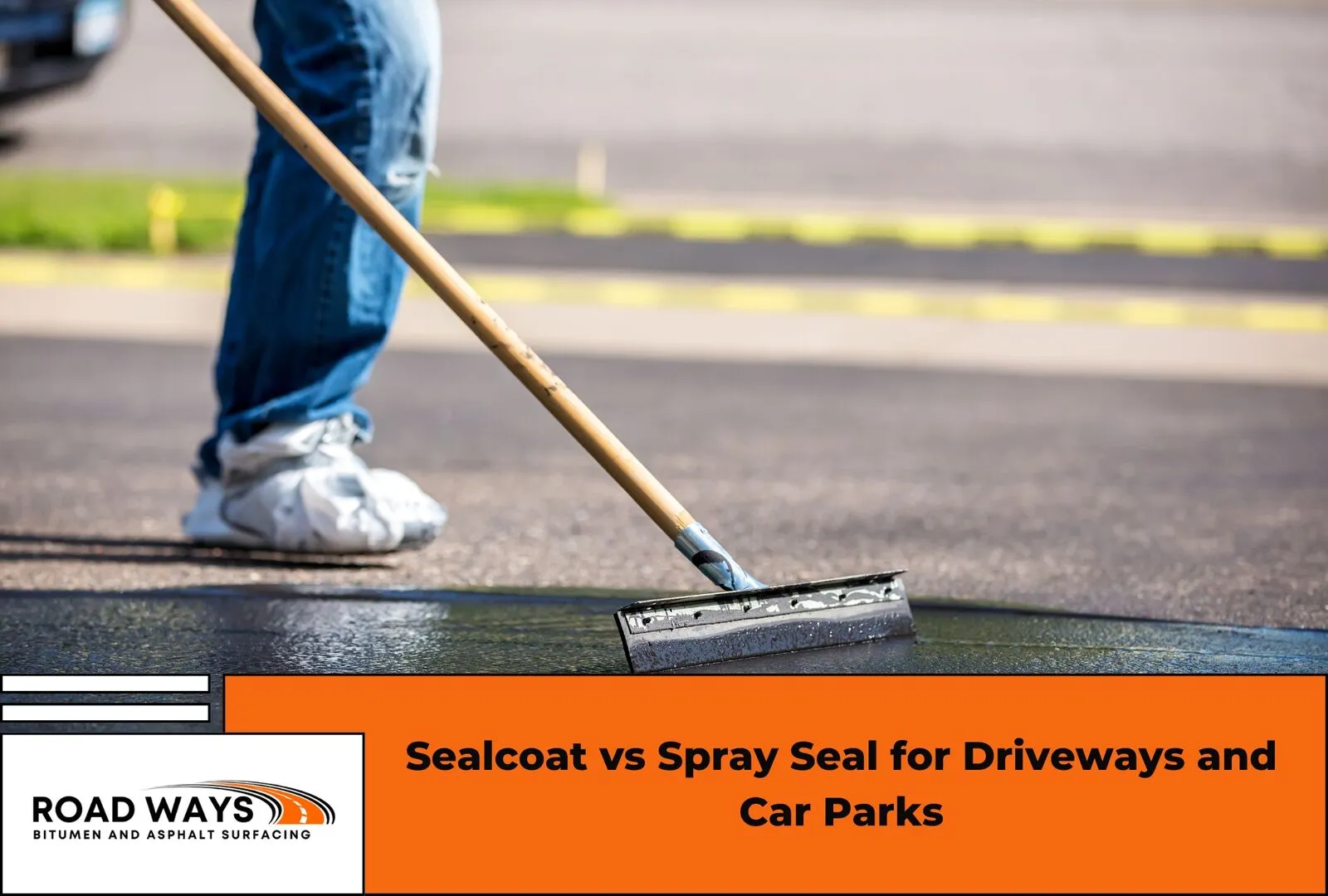
A sealcoat is a thin protective coating applied over existing asphalt or bitumen. It is a bitumen emulsion blended with water, fine aggregate and additives, spread with a squeegee or sprayer over a clean, dry surface. It does not add structural strength, it protects what is underneath from sun, water and wear, and gives a fresh, even black finish that hides minor surface marks.
Sealcoating is a maintenance job, not a building job. It cures in a day or two and typically lasts a few years before it needs redoing. Think of it as regular protection for a driveway or car park that is still in good shape.
What is a spray seal?
A spray seal creates a new sealed surface over a prepared base. Hot bitumen is sprayed down, a layer of crushed stone is spread on top, and a roller embeds the stone into the binder. It does not need an existing sealed surface, so it works straight over road base or a gravel driveway.
Spray seal suits rural roads, long driveways and larger areas where cost and speed matter. It gives good water resistance and a textured, high-grip finish. Laid as a two-coat system it stands up to light and moderate traffic and can last many years. Expect a little loose stone in the first weeks as it settles.
The key differences
- Purpose: sealcoat protects an existing surface; spray seal creates a new one.
- Durability: a two-coat spray seal generally lasts longer than a sealcoat, which needs reapplying more often to keep working.
- Finish: sealcoat is smooth and black; spray seal is textured with a natural stone look.
- Where each fits: sealcoat for residential and commercial surfaces that need a neat finish; spray seal for rural, acreage and large areas.
Which one do you need?
Use a sealcoat if you have a sound asphalt or bitumen surface and want to protect it and freshen the look before minor wear becomes a real problem.
Use a spray seal when you are sealing gravel, road base or another unsealed area, especially over a large or rural site where budget and durability lead the decision. A two-coat seal is the pick where there is regular vehicle movement.
The right call comes down to the condition of the surface, the traffic it takes, and how you want it to look and last.
We apply both across residential, commercial and rural properties in Brisbane, the Gold Coast, Ipswich, the Sunshine Coast and Toowoomba, and we will assess your site and recommend the method that actually fits. Get in touch for honest advice and a free quote.