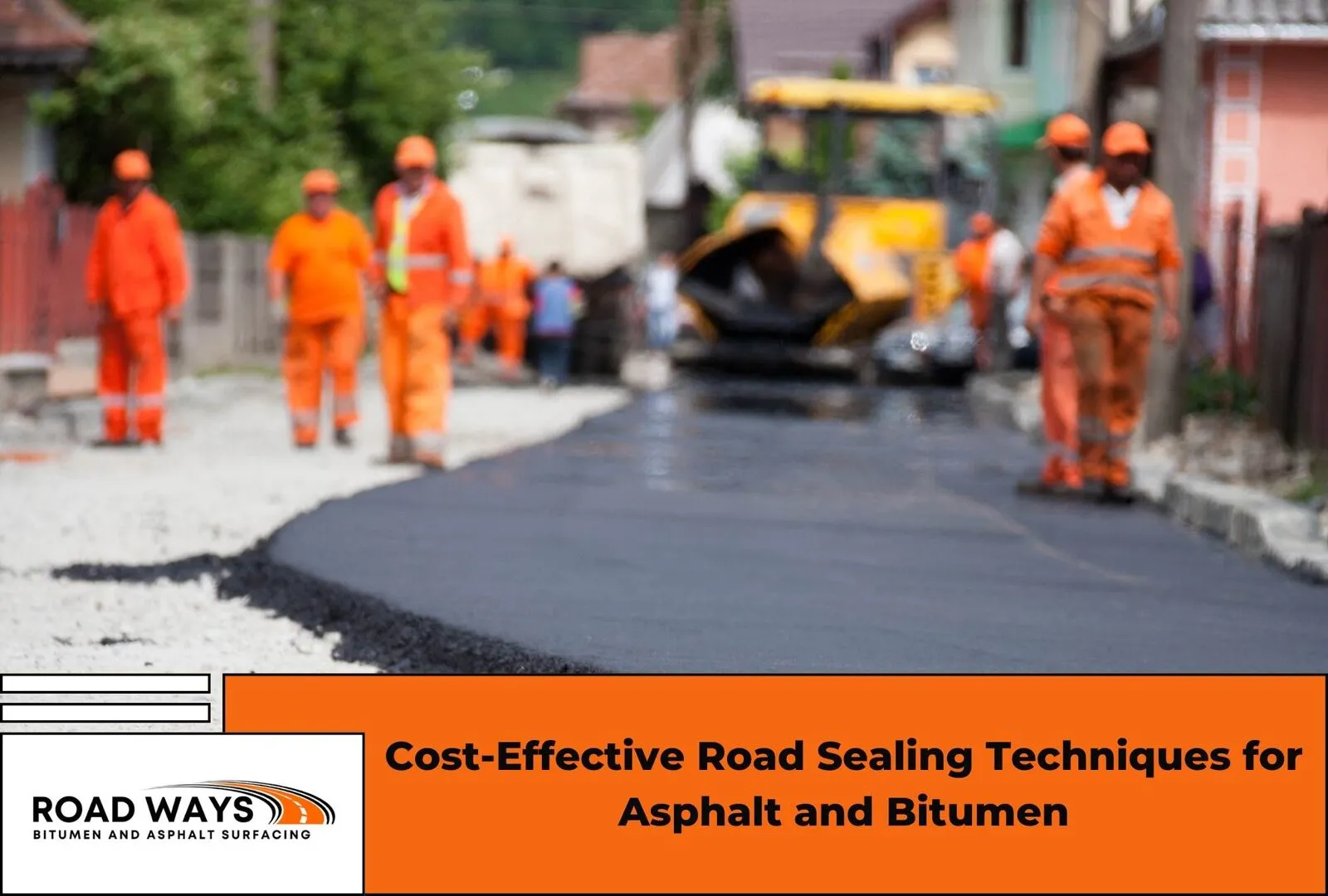
Road sealing is the process of laying a protective coat over a surface to shield the layers underneath from everyday wear. It is a resurfacing technique rather than a rebuild, which is exactly why it is cost-effective: it extends the life of a road, driveway or car park without the expense of reconstruction.
Why sealing saves money
A seal keeps the base protected, so you get years of extra life for a fraction of the cost of relaying the whole surface. Along the way it also:
- protects the surface from the sun's UV, which dries and cracks bitumen over time
- stops moisture seeping down to the base material
- keeps the surface looking clean and even
- resists oil and fuel spills
- reduces wear on vehicle tyres
Asphalt and bitumen: the quick difference
People use the two words interchangeably, but they are not the same. Asphalt is made in a plant, where gravel, sand and other aggregates are heated and mixed with bitumen as the binder, then laid hot for a smooth, hard-wearing surface. A bitumen-sealed surface is sprayed bitumen covered with a layer of aggregate. Asphalt generally gives the smoother, more durable finish, while a spray seal is economical over larger areas.
The cost-effective techniques
Spray sealing. A thin layer of bitumen is sprayed onto the prepared base, then aggregate is spread evenly over the top. The result is a waterproof, skid-resistant, dust-free surface that protects the layers below. It is quick to lay and economical, which makes it a favourite for driveways and rural roads.
Hot bitumen spray sealing. The bitumen is heated and combined with a binder before being sprayed, creating a thin waterproof membrane that grips the surface and holds the aggregate. A dependable option for a hard-wearing seal.
Emulsion sealing. Asphalt, water and a small amount of emulsifying agent are combined into a sealant that goes down at lower temperatures. Handy for maintenance work and lighter-duty surfaces.
What actually drives the cost
The real number depends on the area to be sealed and how much damage there is to deal with first. A sound surface that just needs protecting is cheap to seal. A surface with cracks, potholes and a failing base needs repair before sealing, which is where costs climb. That is why we look at a site before quoting, so the price reflects the actual condition rather than a guess. For related reading, see how proper road sealing reduces expensive repairs.
If your driveway, road or car park is due for sealing, get in touch and we will assess it and give you an honest, written quote at no cost.