
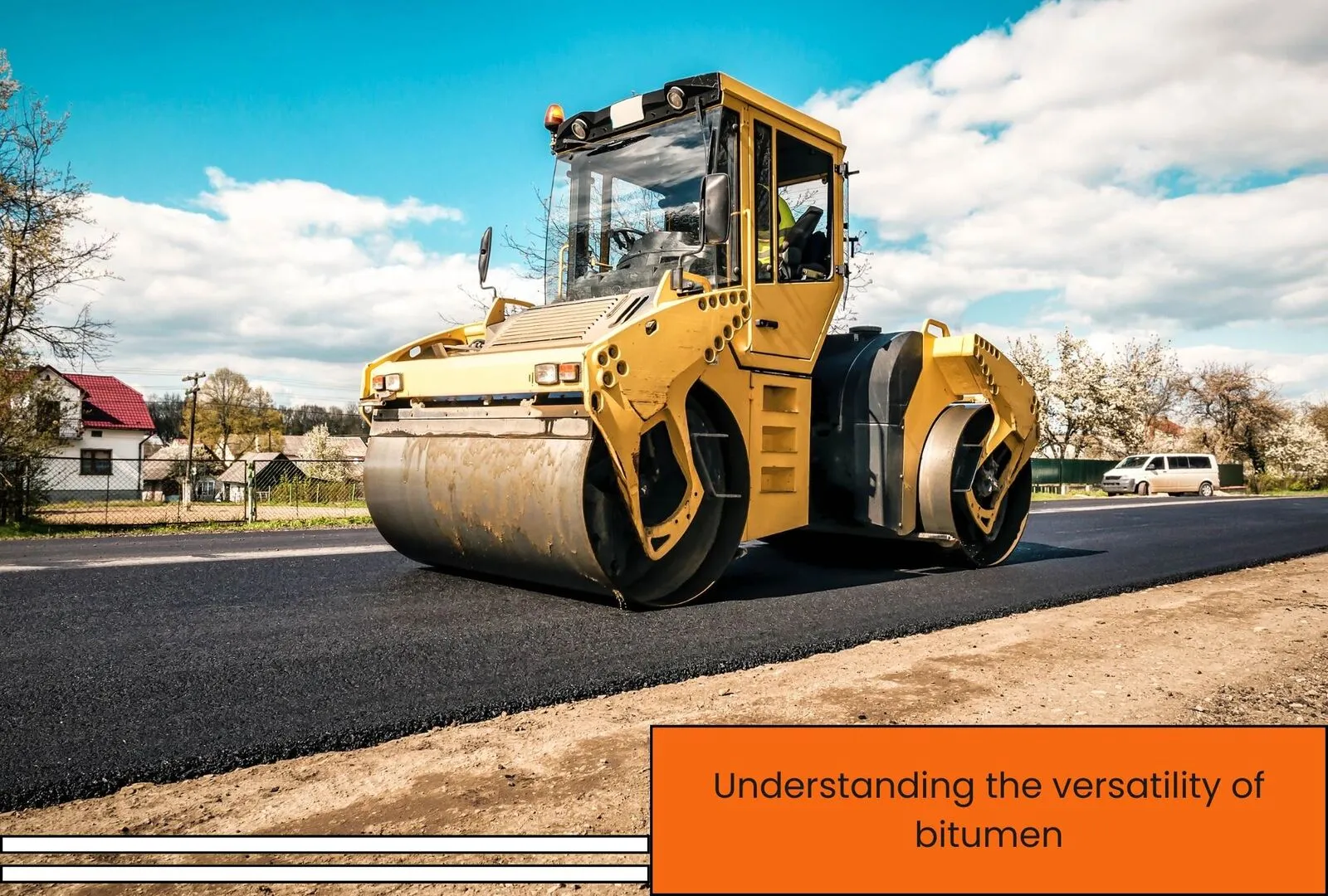
Most people meet bitumen without knowing it. It is the black, sticky, waterproof material that binds a road surface together, and it turns up in far more places than roads. Here is the plain version of what it is, where it came from, and why it is still everywhere.
What bitumen actually is
Bitumen is a heavy, dark, cement-like substance made mostly of hydrocarbons. It can occur naturally, but the bitumen used in surfacing today is almost all a by-product of refining crude oil. On its own it is a strong adhesive and completely waterproof, which is exactly why it has been useful for so long. It is worth clearing up one common mix-up: bitumen is the binder, while asphalt is the finished material made by combining bitumen with aggregate. In everyday Australian usage the two words get swapped around, but they are not the same thing.
A very old material
People have used bitumen for thousands of years. The ancient Mesopotamians waterproofed their buildings and boats with it and used it to seal containers. The Egyptians used it in construction and in preserving and sealing work. Its use grew enormously during the Industrial Revolution, when better ways to extract and process it made it practical to surface roads and buildings at scale. That is the era that turned bitumen from a curiosity into the backbone of modern roadbuilding.
Where it is used today
Bitumen is genuinely versatile. The main uses are:
- Roads and pavements. Mixed with aggregate to make asphalt, or sprayed and covered with stone to make a seal, it surfaces most of the roads and driveways we use.
- Roofing and waterproofing. It creates waterproof layers in roofs, foundations and basements, and seals surfaces against water.
- Insulation, adhesives and coatings. It shows up in building insulation, in some adhesives and sealants, and as a component in certain paints and protective coatings.
The good and the not-so-good
Bitumen earns its place because it is durable, waterproof and relatively cheap, which makes it a sensible choice for a lot of jobs. The trade-offs are environmental: extracting and processing it has a footprint, and it is a non-renewable resource. That is driving real interest in doing better.
Where it is heading
Bitumen is not going anywhere soon, but the industry is working to reduce its impact. Recycling is already common, with reclaimed asphalt pavement mixed back into new work rather than sent to landfill. Researchers are also trialling alternative and recycled materials, including recycled plastics, in road surfaces. Expect the material to get cleaner and more circular over time rather than disappear.
For most property owners, the practical takeaway is simple: bitumen is a proven, hard-wearing surfacing material, and the right form of it, whether a smooth asphalt or a sprayed bitumen driveway, depends on the job.
If you are weighing up a surface for your place, get in touch and we will give you an honest recommendation and a free written quote.