
Water running down a sloped asphalt driveway can cause flooding, surface damage, and even weaken the base underneath. Many property owners deal with water pooling near garages or washing soil away at the edges. The best way to prevent this is with a proper drainage system.
The most reliable options include channel drains, spoon drains, crossfall grading, and permeable edging. The right choice depends on the slope and layout, but installing one or a mix of these methods will keep water under control and protect the driveway for years.
Why Drainage Is Needed on Slopes
Rainwater naturally flows downhill, which means sloped asphalt driveways collect more water at the base. This often leads to flooding near garages and dampness inside homes, especially if the water reaches storage areas or living spaces.
Another problem is erosion. Water that flows unchecked can strip away soil and asphalt along the edges, leaving the surface unstable. Pooling is also a risk, as standing water seeps under the asphalt and weakens the foundation. Over time, this leads to cracks, potholes, or sinking.
Shaded sections of the driveway may also grow moss or algae, creating slippery and unsafe conditions. Even a driveway that looks solid can fail if drainage is poor. Fixing water damage after it occurs is expensive, but planning drainage early reduces long-term costs and keeps the surface stable.

Channel Drains Across the Driveway
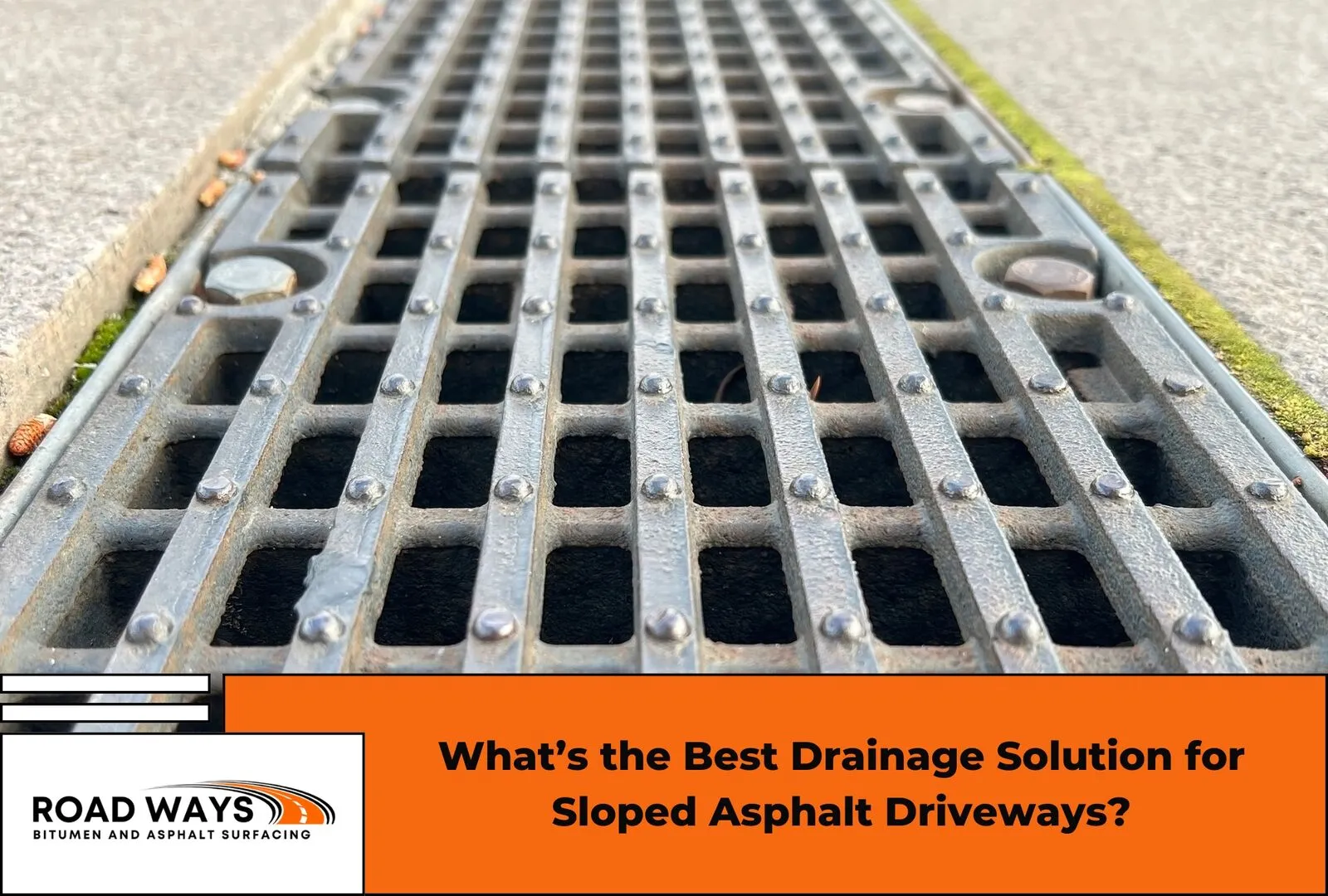
Channel drains, also called strip drains, are often the best option when a driveway slopes directly towards a house or garage. They are installed as a narrow trench across the bottom of the driveway to intercept water before it reaches the building.

The drain has a grated cover that collects runoff, while pipes underneath carry it into stormwater systems or soakage pits. This design keeps water out of garages, basements, and walkways where flooding is a concern.
Channel drains are low profile and do not affect the appearance of the driveway. They are also easy to maintain, requiring only occasional clearing of debris from the grate. Because they collect water at the source, they are one of the most effective ways to prevent flooding and structural damage. Both suburban and rural driveways can benefit from this solution.
Spoon Drains for Surface Runoff
Spoon drains are shallow, curved trenches made of concrete, either integrated into the driveway or placed beside it. Instead of a grate, the smooth shape of the drain directs water into stormwater systems or landscaped areas.
They are particularly effective for long driveways where water builds up gradually rather than rushing to a single point. Spoon drains guide water in a controlled way, preventing erosion and reducing pooling.
Because they do not use a grate, they require very little maintenance and are less likely to become blocked. They also blend into the surface, so they are less visible than other drainage systems. When constructed properly, they last as long as the asphalt surface itself.
This solution is cost effective during new builds, as it can be formed at the same time as the driveway. For properties with extended slopes, spoon drains provide reliable and low-maintenance control of surface water.
Crossfall Grading for Natural Flow
Crossfall grading is a design method where the driveway is built with a slight tilt across its width. Instead of water flowing only down the length of the driveway, it is guided sideways into a garden bed, swale, or drainage channel.
This option is useful for wide driveways or where there is space at the sides to absorb or direct the runoff. Because it relies on surface shape, it does not require a separate drain or grate. This reduces long-term maintenance and makes it a natural way to manage water flow.
Crossfall grading must be built during construction, as it is difficult to retrofit once the asphalt has been laid. When done correctly, it provides effective drainage without affecting how the driveway looks or functions.

Combined with sealing and routine checks, crossfall grading ensures water is diverted away from vulnerable areas and reduces the risk of damage caused by pooling or erosion.
Permeable Edging and French Drains
Permeable edging uses the space beside a driveway to manage runoff. The most common method is a French drain, which is a perforated pipe placed in a trench filled with gravel. Water from the driveway seeps into the gravel and flows into the pipe, which carries it away.
This system works best where there are garden beds, gravel strips, or lawns along the driveway. It can connect to existing stormwater systems or release water into landscaped areas.
French drains reduce pooling and erosion, and they also soften the look of the driveway by blending with the surrounding landscape. They can be installed during construction or added later as a retrofit.
Regular checks are needed to prevent the gravel from clogging with soil or debris. With proper maintenance, permeable edging provides long-term water control and supports the overall drainage system on the property.
Sealing and Ongoing Maintenance
Drainage systems protect against surface water, but the driveway itself must also be maintained. Small cracks or depressions let water into the base, weakening the structure and shortening the lifespan of the asphalt.

The surface should be inspected regularly, particularly after heavy rain. Any cracks should be sealed quickly to stop them spreading. Sealcoating every few years adds a protective layer that keeps the asphalt watertight.
It is also important to keep drains clear of debris and watch for early signs of erosion. Preventative maintenance is much cheaper than repairing major damage, and it ensures the driveway remains safe for vehicles.
When combined with a good drainage system, regular sealing and inspections can extend the life of a sloped asphalt driveway by many years.
Choosing the Right Drainage Solution
The right approach depends on how water moves across the driveway and the space available around it. Some driveways only need a single method, while others benefit from combining more than one system. Retrofitting is also possible on older driveways that were not originally designed with drainage.
A professional inspection is the most reliable way to identify risks and match the correct system to site conditions. Roadways provides on-site assessments and designs drainage systems that protect asphalt driveways from flooding, erosion, and long-term damage.
Contact Roadways today to arrange an inspection and receive clear recommendations for your property.
Frequently Asked Questions
What happens if a sloped driveway has no drainage?
Without drainage, water can flood garages, weaken the asphalt base, and cause cracks or potholes. Over time, this leads to costly repairs and safety risks.
Can drainage be added to an existing asphalt driveway?
Yes. Channel drains, spoon drains, and French drains can be retrofitted into existing driveways. The best approach depends on how water currently flows across the surface.
How often should driveway drains be cleaned?
Most drains need checking every few months, especially after heavy rain. Clearing leaves, soil, and debris helps water flow freely and prevents blockages.
Do drainage solutions increase driveway lifespan?
Yes. By keeping water away from the base, drainage reduces erosion and structural damage. When combined with sealing and regular checks, the driveway can last many more years.


