
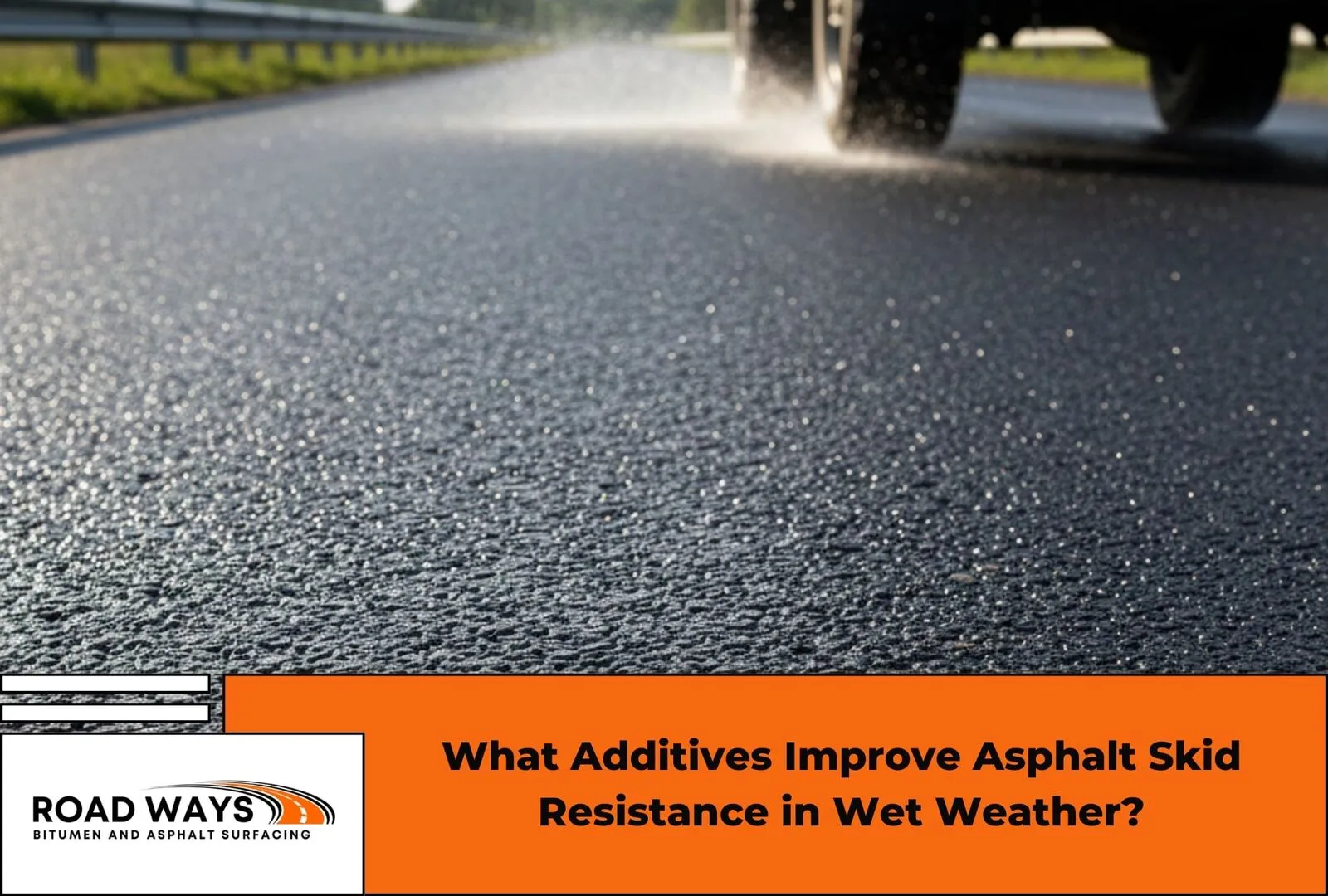
What Additives Improve Asphalt Skid Resistance in Wet Weather?

Table of Contents

what additives improve asphalt skid resistance in wet weather

Improving asphalt skid resistance in wet weather comes down to using additives that increase texture, bonding strength and durability. The most effective options include polished stone resistant aggregates, anti-stripping agents, polymer modified bitumen, surface grit treatments and selected recycled additives. These materials help asphalt maintain traction when rainfall creates a thin layer of water that reduces tyre grip.

Wet conditions can quickly make smooth surfaces unsafe, especially in areas with frequent traffic or steep gradients. Without enough surface texture, braking distance increases and vehicles become less stable during turns or sudden stops.

Using the right additives helps asphalt hold its shape, resist moisture damage and maintain the roughness needed for safer performance. With these materials in place, the pavement stays stable and performs better during wet weather.

Why Skid Resistance Matters

Skid resistance plays an important role in keeping asphalt surfaces safe during wet weather. When rainfall forms a thin layer of water, tyre grip reduces and braking distance increases. If the pavement becomes smooth or loses texture, vehicles can slide during cornering or sudden stops. This risk is higher in steep driveways, busy intersections and carparks where water can pool.

Improving skid resistance supports safer movement and helps prevent incidents caused by low friction. It also reduces long-term wear, as surfaces with stronger texture handle water and traffic more effectively. Using the right mix design, additives and surface treatments helps asphalt stay stable and perform well when roads are wet.

why skid resistance matters

Key Additives That Improve Skid Resistance

Additives support asphalt performance by improving texture, strengthening the mix and reducing the effects of moisture. These materials help tyres maintain contact with the surface when wet weather reduces grip. Selecting the right additives helps improve safety in high-traffic or high-rainfall areas and supports longer pavement life.

1. Polished Stone Resistant Aggregates

Polished stone resistant aggregates are one of the most effective materials for improving asphalt skid resistance in wet weather. These aggregates are hard, durable, and naturally resistant to becoming smooth under traffic. Stones such as basalt, granite, and dolerite provide a rough, angular surface that helps tyres maintain grip, even after long periods of use.

Over time, traffic can cause some aggregates to polish and lose their friction. Using polish-resistant stones prevents this issue, allowing the asphalt to keep its texture and maintain safer performance. These aggregates are especially useful in areas with heavy vehicle movement, steep gradients, or frequent exposure to rain.

2. Anti-Stripping Agents

Anti-stripping agents help improve the bond between bitumen and aggregate, which is essential for maintaining skid resistance in wet conditions. Moisture can weaken this bond over time, causing the surface layer to detach or lose texture. When this happens, the pavement becomes smoother, reducing tyre grip during braking and turning.

These additives work by strengthening the adhesion within the asphalt mix, helping it resist moisture damage. By keeping the aggregate firmly in place, the surface maintains its roughness and continues to provide traction in wet weather. Anti-stripping agents are especially valuable in areas exposed to frequent rain or where water tends to sit on the pavement.

3. Polymer Modified Bitumen (PMB)

Polymer modified bitumen, often called PMB, is used to improve the strength and flexibility of asphalt mixes. The added polymers help the surface resist rutting, cracking, and deformation, which supports better skid resistance during wet conditions. When asphalt holds its shape under traffic, the surface texture stays more consistent, allowing tyres to maintain traction.

PMB also helps preserve micro-texture, the fine surface detail that contributes to grip when water forms a thin layer over the pavement. This makes PMB especially useful in high-traffic areas or locations exposed to large temperature changes. By improving resilience and stability, these mixes support safer performance during wet weather.

4. Surface Grit or Grit Sealing

Surface grit, sometimes applied as a grit seal, is used to increase the roughness of asphalt immediately after installation. A thin layer of fine aggregate is spread over the surface to create additional texture, which helps tyres maintain grip during wet conditions. This extra roughness is especially useful in areas where vehicles brake or turn frequently.

Grit sealing can also enhance safety on steep driveways, carparks, and sections with higher risk of slipperiness. The added texture supports better water dispersion, reducing the chance of a smooth film forming on the surface. When used correctly, surface grit provides a simple and effective way to improve traction and support skid resistance.

5. Recycled Additives

key additives that improve skid resistance

Recycled additives can also support skid resistance when combined correctly in an asphalt mix. Materials such as crushed glass, reclaimed asphalt pavement, and recycled aggregates help maintain surface texture while offering an environmentally conscious option. Their angular shapes contribute to friction, which helps tyres grip the pavement during wet conditions.

These additives work best when blended with quality aggregates to ensure the surface stays durable and consistent under traffic. When used in the right proportions, they can enhance micro-texture and support safer performance in areas exposed to rain.

Recycled materials also help reduce waste, making them a practical choice for projects wanting both safety and sustainability benefits.

Keeping Asphalt Safe in Wet Conditions

Keeping asphalt safe during wet weather requires more than quality additives. Traffic and rainfall gradually wear down the surface and can polish the aggregate, reducing friction. When this happens, tyres lose grip and the pavement becomes more slippery during braking or turning.

Routine maintenance helps prevent these issues. Cleaning removes debris that collects water, while sealing or resurfacing restores surface texture. These steps help reduce slipperiness in high-rainfall or high-traffic areas.

Planned maintenance also extends the life of the pavement and supports stable performance in different weather conditions. More information can be found in the Asphalt Driveways FAQs.

Applications Across Different Conditions

Asphalt surfaces across Australia face varying traffic loads and weather patterns. Each environment requires the right mix design to maintain skid resistance. In coastal or high-rainfall regions, moisture can weaken the pavement, making additives that resist stripping especially important. High-traffic commercial areas benefit from harder aggregates that maintain texture under pressure.

Industrial sites, carparks and steep driveways need materials that hold their shape and provide steady traction. Choosing additives based on the site’s needs helps maintain safer performance in wet conditions. To see where these solutions are available, you can view our service locations.

applications across different conditions

Get Expert Guidance for Safer Asphalt Surfaces

The performance of skid-resistant asphalt depends on the materials used and how well the pavement is installed. At Roadways, we focus on creating surfaces that maintain texture, support drainage and stay stable during wet conditions. Correct compaction and smooth finishing help reduce water pooling and keep the pavement performing as expected when rainfall affects traction.

If the surface begins to lose texture or becomes slippery, we can assess its condition and explain the options that may improve its performance. Our team reviews the site, traffic levels and weather exposure to recommend suitable additives, sealing methods or resurfacing solutions that support safer movement.

We can also help you plan maintenance schedules that retain skid resistance over time. If you would like to discuss a project or arrange an inspection, you can contact us to plan the next steps. Our goal is to help you maintain an asphalt surface that stays safe and reliable in wet conditions.

FAQs

Which additives work best for improving skid resistance in wet weather?

Polished stone resistant aggregates, anti-stripping agents, polymer modified bitumen, surface grit and selected recycled additives support traction in wet weather.

Why do asphalt surfaces lose grip after rain?

Rain creates a thin film over the pavement, reducing tyre contact. If the aggregate becomes smooth or the surface loses texture, friction decreases.

How do anti-stripping agents help in wet conditions?

They strengthen the bond between bitumen and aggregate, reducing moisture damage and helping the surface maintain the texture needed for grip.

Is polymer modified bitumen useful in high-traffic areas?

Yes. Its flexibility helps the pavement resist deformation, supporting more consistent texture and better traction.

How often should asphalt be maintained to support skid resistance?

Cleaning, sealing and resurfacing should be planned based on rainfall and traffic levels. High-rainfall or heavy-use areas require more frequent care.

Table of Contents

Share this post: