
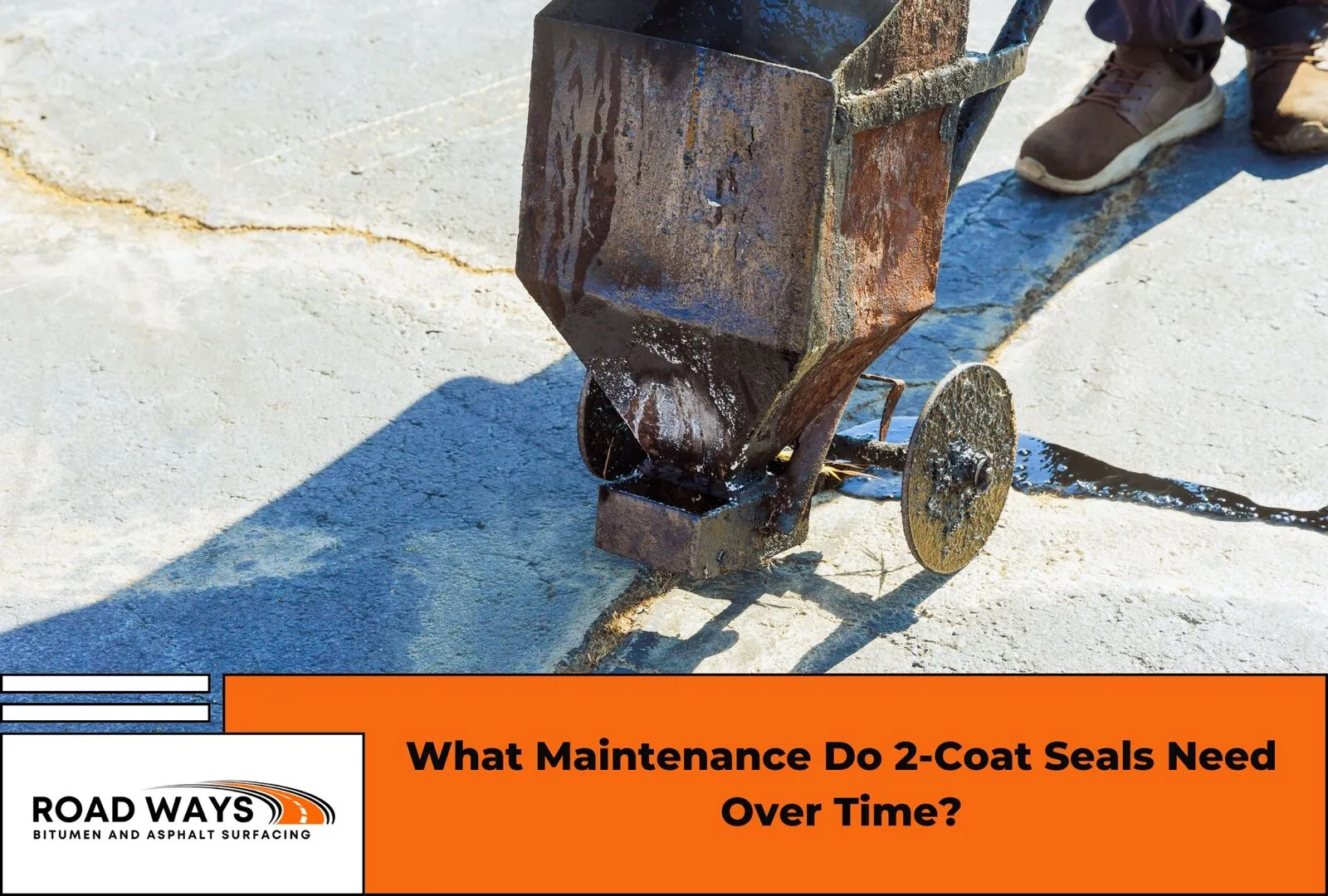
A 2-coat seal is a tough, economical surface. Two layers of binder and aggregate go down: the first seals and strengthens the pavement, the second adds texture and grip. It is a common choice for rural driveways, access roads and country roads because it holds up well and costs less than a full asphalt lay. Like any sealed surface, it lasts a lot longer if you look after it.
Check it a couple of times a year
Sun, water and traffic wear a seal down slowly, so most of the value is in catching problems early. Walk the surface every six to twelve months, and again after a big wet or a long dry spell. You are looking for fine cracking, loose stone, polished patches, or binder starting to show through. Dry weather can make the binder brittle; standing water after rain points straight at a drainage problem. Small fixes made on time cost a fraction of a resurface later.
Seal cracks before water gets in
Cracks are the main way a seal fails. Once water works into the base through an open crack, it softens the layers underneath and a pothole is not far behind. Fill small cracks with a bitumen crack filler or patching compound while they are still narrow. Edge wear is the other one to watch, especially on narrow drives where wheels run close to the shoulder. Patch broken edges early and build the shoulder back up rather than letting it crumble.
Keep water moving and vegetation back
Water and plant growth do more damage to a seal than traffic does. Keep drains, culverts and table drains clear so water runs off instead of pooling. Trim grass and shrubs back from the edge so the shoulder dries out and the surface is not shaded and damp. A clear edge dries faster after rain and lasts longer for it.
Plan a reseal in time
A well-laid 2-coat seal generally runs ten to fifteen years before the top layer loses its texture and grip. When the stone starts to embed and the surface goes smooth, a fresh coat of binder and fine aggregate brings the grip and protection back. Resealing on time is far cheaper than waiting for the base to fail and rebuilding from the ground up.
If your seal is losing texture, cracking, or holding water, it is worth a proper look before the wet season. Get in touch and we will come out, assess the surface and give you an honest recommendation and a written quote at no cost.